
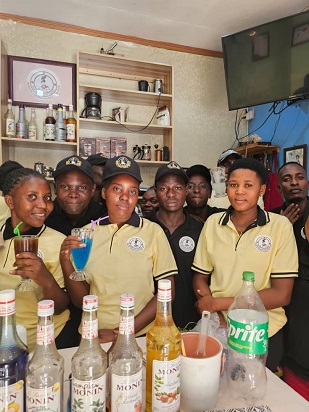
Barista Coffee School and Café is equipping youth with barista skills. Ugandan trained baristas are on high demand in the Middle East
Barista Coffee School and Café is equipping youth with barista skills. Ugandan trained baristas are on high demand in the Middle East
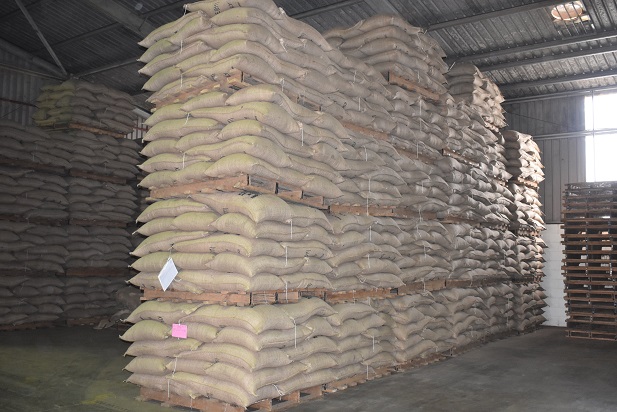
Uganda’s coffee exports have largely consisted of raw beans shipped to international markets. But a new form of coffee export is quietly emerging, the skilled Ugandan baristas trained to work in some of the world’s fastest-growing hospitality markets.
As cafés, hotels and specialty coffee chains expand rapidly across the Middle East, demand is growing for professionally trained hospitality workers capable of meeting increasingly sophisticated customer expectations. Uganda, long recognised for producing high-quality coffee beans, is now beginning to export the human skills behind the perfect cup.
At the centre of this growing trend is Barista Coffee School and Cafe, a vocational coffee training institution in Nalukolongo, Kampala, that is preparing Ugandan youth for both local and international employment opportunities.
Established in 2021, the school offers hands-on certified training programs covering espresso extraction, milk steaming, latte art, brewing methods, coffee knowledge, customer care and café operations.
But beyond training, the institution has also positioned itself as a bridge between Ugandan talent and global hospitality employers.
According to Emmanuel Mugisha, the Chief Executive Officer of Barista Coffee School and Café, the school works closely with legally registered labour recruitment and labour export companies like Ezvisakampala in Kololo to help graduates secure overseas employment opportunities, particularly in Kuwait, Saudi Arabia, Dubai and other Middle Eastern markets.
“We realised there was growing international demand for professionally trained baristas, especially in countries investing heavily in hospitality and tourism,” Mugisha said. “Our role is not only to train students but also to prepare them for international work environments and connect them to credible recruitment partners.”
Mariam Nabukeera, a barista and trainer at Barista Coffee School and Café explained that before graduates are recommended for placement opportunities, they undergo practical training focused on technical precision, workplace professionalism, customer service and adaptability.
“Middle Eastern cafés operate at very high standards because customers are experienced coffee consumers,” Nabukeera said. “That means our students must understand espresso calibration, milk texturing, machine maintenance, presentation and customer interaction at a professional level.”
The school also helps graduates prepare for interviews, documentation processes and relocation requirements through partnerships with licensed labour export companies. For many graduates, the overseas opportunities are life-changing.
“The training gave me confidence to compete internationally”
Twenty-five-year-old former trainee Sarah Nankunda now works in a specialty café in Kuwait City, where she serves customers from different nationalities every day. According to Nankunda, the transition from Kampala to Kuwait’s competitive café scene would have been difficult without the practical exposure she received at Barista Coffee School and Café.
“When I arrived in Kuwait, I discovered customers here are very knowledgeable about coffee,” she said during an online interview. “They pay attention to flavour, milk texture, latte art and even how quickly you serve them. The training I received in Uganda prepared me for those expectations.”
She says mastering espresso extraction and consistency during her training became particularly important in her current role. “At the school we repeated practical exercises every day until perfection,” she explained. “That discipline helped me adjust quickly because international cafés demand consistency in every cup.”
Nankunda now hopes to eventually open her own café business after gaining more international experience.
“Customers expect professionalism at every level”
Another graduate, Brian Kato, currently works in Riyadh, Saudi Arabia, where he is employed at a modern café serving hundreds of customers daily. Kato says the professionalism taught during his training became just as important as the technical coffee skills.
“In Saudi Arabia, cafés are highly organised and customer experience is taken very seriously,” he explained. “At Barista Coffee School and Café we learned not only beverage preparation but also customer service, teamwork and workplace discipline. Those skills helped me fit into this environment.”

Kato says the café where he works uses advanced coffee equipment and specialty brewing methods similar to what he trained on in Kampala. “That exposure made a huge difference because I was already familiar with professional machines and café workflow,” he said. “Many employers want workers who can immediately perform without extensive retraining.”
He believes Ugandan youth can compete internationally if given proper vocational training and opportunities.
“Coffee has become my professional career”
For Esther Namubiru, who now works in Dubai, becoming a barista transformed her future entirely. “I initially joined the school because I was searching for employment opportunities,” she said. “But the training helped me discover that coffee is actually a serious profession with global opportunities.”
Namubiru says Dubai’s cosmopolitan hospitality sector exposed her to customers with highly sophisticated coffee preferences.
“You serve tourists, business people and experienced coffee drinkers from all over the world,” she explained. “They understand specialty coffee and expect quality service. The practical training in Uganda helped me develop confidence and professionalism.”
She particularly credits the school’s emphasis on latte art, machine handling and customer communication for helping her adapt abroad. “People think being a barista is simply making coffee, but internationally it requires precision and customer engagement,” she said. “The school trained us for exactly that.”
Industry observers say the growing international demand for Ugandan baristas reflects broader changes within the global coffee economy, where hospitality businesses increasingly seek trained workers from emerging markets.
For Uganda, the trend also signals an important shift in how the country participates in the coffee industry, moving beyond exporting raw beans toward exporting skilled labour and hospitality expertise.
Mugisha believes this evolution could create long-term employment opportunities for thousands of young Ugandans. “Uganda already has strong coffee heritage because we produce quality beans,” he said. “Now we are proving that we can also produce world-class coffee professionals capable of competing internationally.”
As Middle Eastern hospitality markets continue expanding, institutions like Barista Coffee School and Café may increasingly become part of Uganda’s growing labour export story, one built not only on agriculture, but on skills, professionalism and the global language of coffee.