

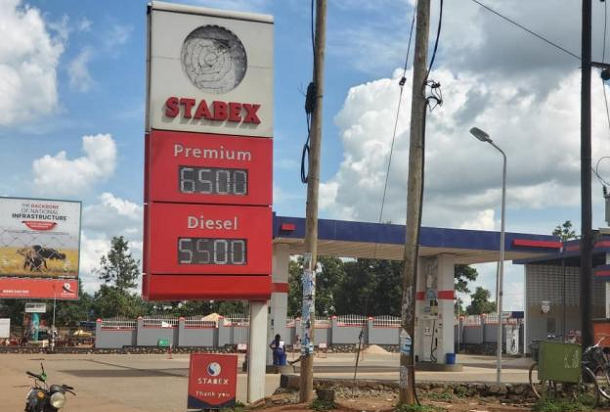
Current fuel price at STABEX Fuel Station in Gulu city as of April 28 2026. Photo by Desire Alimocan
Current fuel price at STABEX Fuel Station in Gulu city as of April 28 2026. Photo by Desire Alimocan
Motorists across Uganda have raised transport fares for both short and long distances in towns and major cities amid growing concern over rising fuel prices.
Fuel costs have steadily climbed in recent weeks following disruptions linked to ongoing conflict between US and Iran, which has affected global oil supplies.
In major towns and cities, transport operators especially boda boda and taxi drivers say they are struggling with higher fuel costs and intermittent shortages, forcing them to raise fares.
Emmy Ocen, chairperson of the Gulu City West Boda Boda Association, told Uganda Radio Network on Monday that fares within the city have increased by at least 1,000 shillings.
According to Ocen, the fare adjustments are a direct response to rising pump prices across fuel stations in the city center.
“We have asked our customers to understand that fuel prices have gone up, and this will inevitably affect transport fares. We encourage them to be willing to negotiate, as this situation is affecting the entire country,” Ocen said.
He added that the increases affect not only passengers but also operators, calling for mutual understanding between both parties. For short distances especially trips under one kilometer the association has recommended a fare increase of 1,000 shillings.
As of Tuesday, April 28, 2026, fuel prices in Gulu City have risen sharply. At STABEX Fuel Station in Bardege-Layibi Division, petrol is selling at 6,500 shillings per litre, while diesel costs 5,500 shillings.
At TotalEnergies, petrol is priced at 5,490 shillings and diesel at 5,359 shillings. Shell stations are selling petrol at 5,580 shillings and diesel at 5,419 shillings.
The rising costs are not limited to Gulu. In Luwero Town Council, several fuel stations, including Shell and TotalEnergies, had run out of petrol by press time and were only selling diesel.
Information obtained by our reporters shows petrol prices in Luwero ranging from 6,000 to 7,000 shillings a litre, while diesel costs between 5,000 and 5,300 shillings. This has led to fare increases of between 1,000 and 2,000 shillings.
Asuman Kaaya, secretary of the Luwero Town Council Taxi Drivers Association, said the fare hikes are necessary to offset rising operational costs.
Daniel Kyobe, a taxi driver at Luwero Taxi Park, says fuel expenses for a round trip between Luwero and Kampala have risen from 80,000 to 120,000 shillings.
Another driver, Sulaiman Bajja, said operators are appealing to vehicle owners to reduce daily rental fees, as profits have been eroded by high fuel costs.
According to the boda boda operators in the district, some passengers are resisting the fare increases. Meddie Kasumba, a boda boda rider at Kasiiso Stage, said many commuters have opted to walk rather than pay higher fares.
In Hoima City, fuel prices have also surged. Petrol is now selling between 6,000 and 7,500 shillings per litre from 5,600, while diesel ranges from 4,900 to 5,800.
At Oil Energy fuel station in Kiganda Cell, petrol is priced at 7,000 shillings a litre, up from 5,480, while diesel costs 5,400 shillings.
Anthony Odong, a manager at the station, attributed the increases to nationwide fuel shortages.
The impact has been significant for transporters. Ongi Kabayuth, chairperson of boda boda riders at Kijangi Landing Site on Lake Albert, said fares to Hoima City have risen from 15,000 to 25,000 shillings.
Kabayuth called on the government to intervene and stabilize fuel prices to ease pressure on both operators and commuters.
The fare hikes come just a week after government issued a statement assuring the public that the country has sufficient fuel stocks and stable supply chains.
In an April 21, 2026 statement, the Energy Ministry with the Uganda National Oil Company (UNOC), said Uganda’s fuel supply remains “stable, sufficient, and well-managed” following routine monitoring of national reserves.
According to the statement, as of April 20, the country had 70.5 million litres of petrol (equivalent to 19 days of cover), 43.2 million litres of diesel (12 days), and 32 million litres of jet fuel (53 days).
The government also said additional shipments were already in transit through regional supply routes, including the port of Mombasa and Tanzanian corridors.
The deliveries expected between May and June are projected to boost national reserves, including 183 million litres of petrol and 258 million litres of diesel.
-URN