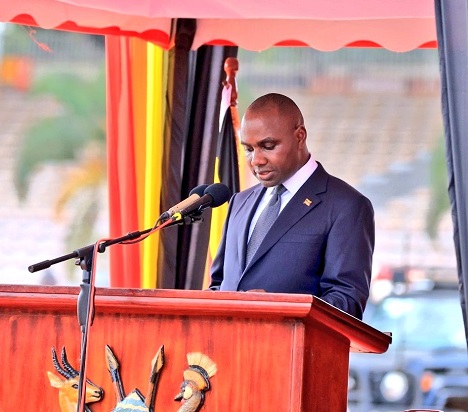

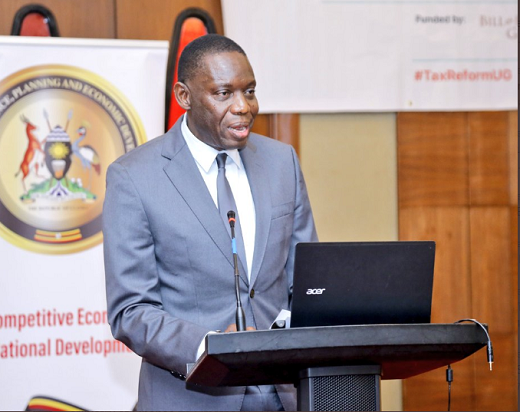
Michael Atingi-Ego, Governor, Bank of Uganda
The Bank of Uganda has revealed that the anticipated revenue from Uganda’s oil production will not be enough to shield Uganda from the economic sabotage that will follow the passing into law The Protection of Sovereignty Bill, 2026.
This is because most of the revenue will go towards payment of debt for the loans Government has acquired to prepare Uganda for oil production.
The revelation was made by Michael Atingi-Ego, Governor, Bank of Uganda, while appearing before Parliament’s Joint Committee of Defence and Internal Affairs and the Legal and Parliamentary Affairs Committee on 28th April 2026, to present the Central Bank’s views on the controversial Bill.
“Most of that money is going to be paid out for debt and not coming back. So, that first oil is not sufficient to handle problems the way it is. And besides, you have the tenfold growth, even without the tenfold growth, this oil will not bail us out significantly, given the outflows that are associated with it. The development of the upstream and the downstream has likely been undertaken through loans. So, the first oil will not be able to be a substitute, if this bill is to be enacted,” Atingi-Ego said.
His remarks were in response to a question raised by Fox Odoi (West Budama North East) who sought clarification over arguments fronted by supporters of The Protection of Sovereignty Bill, 2026 that Uganda’s economy is at its adolescent stage and has since grown, creating the need to make its economy independent from foreign funding.
“So, the Government is saying that starting July 2026, we shall be getting financial inflows from our first oil and that revenue will be sufficient to allay your fears. Have you also ever had such a rumour? Have you ever had discussions with the government of Uganda and you have projections on how much we are going to earn from our resources in oil and gas? In which case, if it’s true that we’re going to get resources from oil and gas, your fears on balance of payment and the stabilisation of the economy do not arise,” Odoi noted.
The Governor, Bank of Uganda further explained that the trend of using oil revenue to pay debt will not just be the case for Government, but also private sector for the likes of the CNOOC and Total that have invested in oil exploration and production, which money is either borrowed as debt or equity that will need to be repaid too.
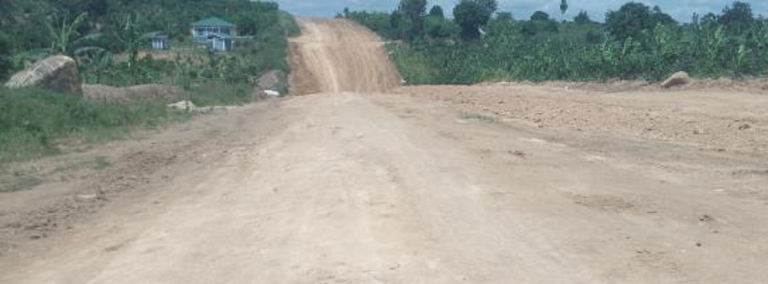
“If you look at the growth of debt in Uganda, it is partly to develop that infrastructure. Currently, we are having huge amounts of debt repayment, partly made possible by the loans. Take, for example, those oil roads, that is all borrowed money. So, we are currently paying about US$2Billion per annum, and we are going to continue for the next four or five years, paying that US$2Billion per annum,” Antingi-Ego added.