

The government has explained the recent ban on some agricultural chemical inputs, saying the decision was reached after comprehensive studies and consultations. The early April 2026 notice by the Ministry of Agriculture, Animal Industry and Fisheries to importers, dealers, and manufacturers, listed nine molecules it was banning immediately, and another nine which it put under restricted use.
Following media reports on the developments, the Ministry says the agriculture sector and the business community were alarmed by what the ministry called alarmist and sensational reporting. Some of the targeted molecules are used in some of the most popular herbicides and pesticides in Uganda, but, according to reports, can lead to health and environmental effects if misused or mishandled.
Dr. Paul Mwambu, the Commissioner for Crop Inspection and Certification at the Ministry, says the decision was taken after concerted research with the aim of not disrupting the industry and related businesses.
Some of the concerns by the agriculture sector were that the government decision did not provide alternatives, while others queried why the ban was coming now, after decades of use of the same inputs.
Dr Mwambu says when a product comes onto the market, it may take longer to show effects, and that therefore, studies had to be done in Uganda and other countries, as well as provide for the effects of the ban and restrictions before implementation.
Nine chemicals were banned, while others were retained due to their exclusive importance despite the risks associated. Restricted use involves close monitoring, use on large plantations, and in areas that are far enough from other untargeted fields or crops. Dr Mwambu says that as the country looks for alternatives, the immediate approach is to ensure proper use from the time the chemical is acquired up to when the container is to be disposed of, so as to ensure safety, especially at the farm level.
The commissioner expressed the need for a stronger regulatory environment amidst the emerging challenges to the agriculture sector. “Our sector is faced with several emerging challenges, ranging from the increasingly unpredictable climate and weather patterns, evolving pest pressures, and ever-changing and strict market requirements,” he says.
He adds that the regulatory landscape has to evolve to be in tandem with “the evolving and changing science, embracing evidence-based product approvals, the ongoing regional input harmonisation efforts, and a risk rather than hazard approach, that guarantee better seed, fertiliser, and crop protection products to farmers without compromising the health and safety of humans and the environment.”
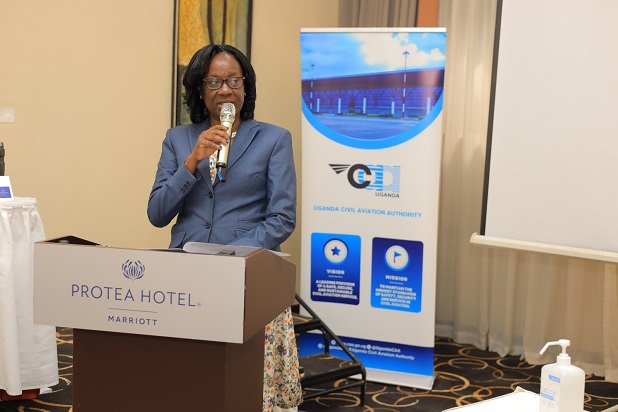
He was speaking at the ongoing two-day symposium on the theme, “Emerging Trends in Crop Protection and Fertiliser Industry: embracing change and sustainability to ensure food security, health and safety,” organized by CropLife Uganda. CropLife Uganda is a national membership association of manufacturers, importers, and distributors of Crop Protection Products and serves as a voice and leading advocate for the plant science industry in the country.
They aim to improve agriculture through engagement and partnerships, yet are committed to sustainable agriculture and the responsible use of plant science technologies wherever they are.
Agnes Mbabazi, the chairperson of CropLife Uganda, says the “thorny” topic of products under registration review needs to be handled prudently without undermining agricultural productivity in the country.
On her part, she says that they prefer dialogue to addressing issues that may affect the sectors, because the agriculture industry is the basis for the country’s transformation, urging the ministry to listen and work with them for solutions.
Mbabazi stresses that failure to collaboratively address challenges like counterfeit agricultural products, unsafe chemical use, and regulatory gaps poses a serious threat to national food security and Uganda’s competitiveness in the regional and international markets. Vikas Chaudhari, Business Development Manager at UPL, a global producer of agricultural inputs, says it is important to sensitise farmers on handling of chemicals, but also ensuring that counterfeits are kept at bay and that genuine chemicals are affordable.
Currently, the dealers say, input prices have registered a 15 percent increase, with the newly reinstated import levy of 2.5 percent, as well as the ongoing war in the Middle East, which is a major source of fertilisers for Africa. Chaudhari says this cost is being transferred to farmers by some companies, adding that as industry leaders, they are working to ensure that such effects are mitigated, while government intervention is vital.
Given Mudenda, Managing Director, Eastern and Southern Africa Business Area at Syngenta, a global science-based agriculture technology company, emphasised the need for training farmers on safe application of technologies as well as environmental protection.
Substances that were banned immediately included active ingredients like alpha-cypermethrin, atrazine, butachlor, dimethoate, and propanil, and products carrying these are supposed to be withdrawn from the market by mid-June this year. Those under restricted use and being phased out over five years include profenofos for fighting the fall armyworm in maize, imidacloprid for coffee pest control, and indoxacarb for tomatoes and brassicas.
-URN