
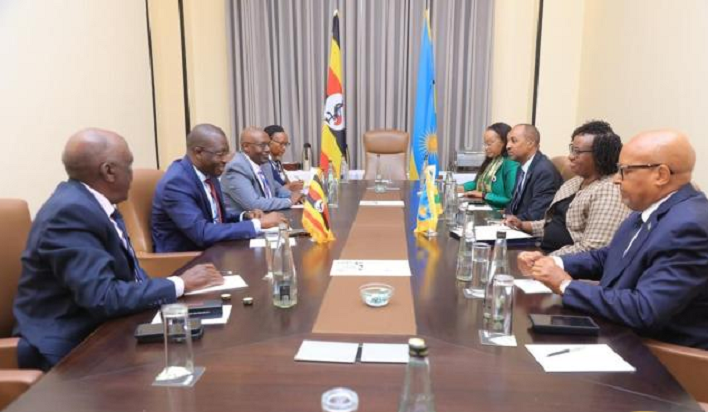
Top Ugandan and Rwandan officials led by ministers of state, in a closed-door session of the JPC
Uganda and Rwanda have agreed to “move on” from diplomatic conflicts that threatened their historical friendship in recent years.
This came at the just-concluded Joint Permanent Commission (JPC) meeting in Kampala, at which four new memoranda of understanding were signed, in the areas of health, education, agriculture, and local governance.
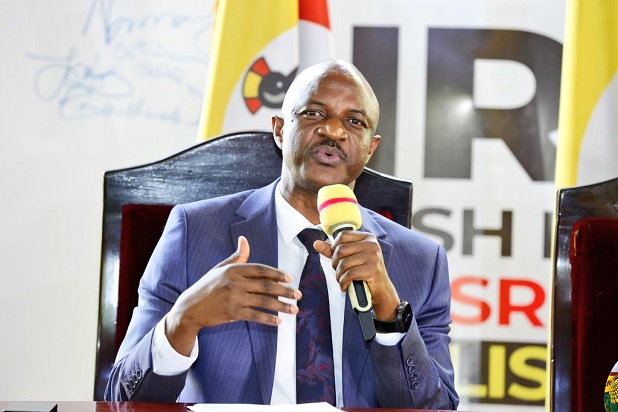
At the end of the three-day 12th session of the Joint Permanent Commission, the Minister of State for Foreign Affairs, John Mulimba, likened the previous standoffs to quarrels between a married couple, where, despite taking solemn vows, quarrels do happen.
What matters is picking themselves up and moving on, Mulimba said, adding that Ugandans and Rwandans are only interested in seeing barriers resolved, not debated.
Rwanda’s Minister of State for Foreign Affairs, Usta Kaitesi, notes that relations between the two countries are built on shared history, vision, and continuous engagements between Presidents Yoweri Museveni and Paul Kagame.
She called for commitment between the two countries to implementing the resolutions that come from such engagements, if they were to be meaningful.
Kaitesi reaffirmed the importance of the Joint Permanent Commission in advancing results-oriented cooperation between the two countries, emphasising the need to translate agreed decisions into concrete and timely actions that deliver tangible benefits to citizens.
Richard Kabonero, the head of the Department of Regional Economic Cooperation at Uganda’s Ministry of Foreign Affairs, says many other issues were discussed and agreed upon, including tourism, especially cooperation on the MICE (meetings, incentives, conferences, and Exhibitions) industry.
Others included tackling cross-border human trafficking and cybersecurity, as well as animal diseases, including joint vaccination initiatives and students seeking education across the two countries.
The next session of the Joint Permanent Commission is set to take place in Rwanda at a mutually agreed date.
The two countries have arguably had one of the closest bilateral ties, especially socially and culturally, for decades, despite some misunderstandings once in a while.
The most major one in recent years came in 2019 when the border was closed in February 2019 due to disputes, where Rwanda accused Uganda of supporting rebels and harassing its citizens, leading to disruptions of cargo and passenger movement.
It was reopened in January 2022.
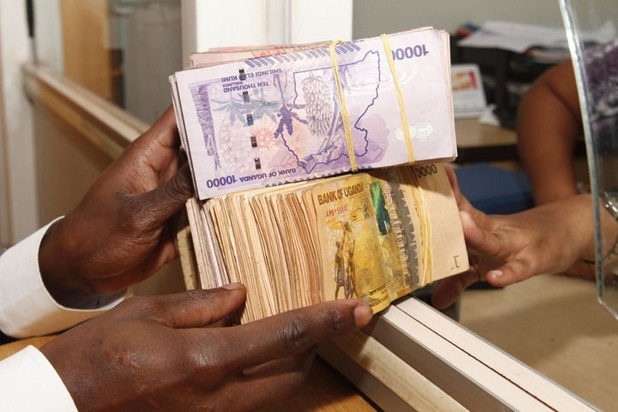
Uganda exports goods worth about USD 260 million per year to Rwanda, including food, construction materials, and electricity, while Rwanda’s exports to Uganda amount to about USD 12 million.
Minister Mulimba also hailed the defense and security cooperation between the two nations, which have ensured improved security.
-URN