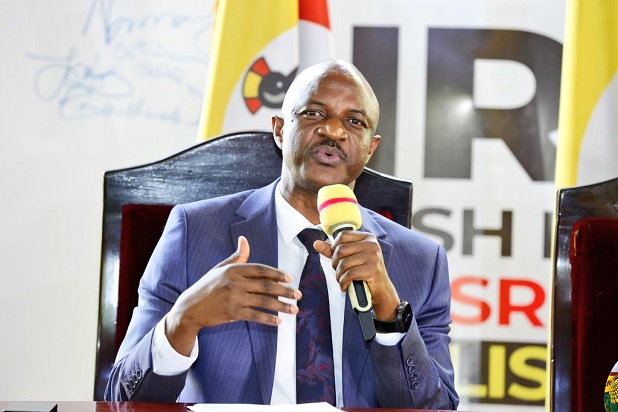


Michael Jjingo
By Michael Jjingo
In a world defined by volatility, complexity, and relentless change, the traditional image of the all-knowing, command-and-control leader is steadily losing relevance. The modern organisation no longer thrives on authority alone; it demands adaptability, trust, and human connection. This raises a compelling question: could humility, often mistaken for weakness, be the most powerful competitive advantage of the future?
At first glance, humility appears counterintuitive in leadership. After all, leaders are expected to project confidence, decisiveness, and authority. Yet, as organisations confront uncertainty, it is increasingly evident that rigid certainty can be more dangerous than thoughtful openness. Humility, in this context, is not self-doubt; it is self-awareness. It is the quiet strength to acknowledge limitations, invite diverse perspectives, and remain teachable in the face of change.
Few works capture this paradox more powerfully than “Good to Great”, where Jim Collins introduces the concept of Level 5 Leadership, a rare blend of personal humility and professional will. Collins observes that the most effective leaders are those who are “ambitious first and foremost for the cause, the organisation, and its purpose, not themselves.” This combination of humility and focus creates leaders who are both grounded and driven, capable of building enduring greatness rather than fleeting success.
Humility fosters trust, and trust is the foundation of all high-performing teams. In “Leaders Eat Last”, Simon Sinek notes that great leaders prioritise the well-being of their people, creating environments where individuals feel safe to contribute and innovate. “Leadership is not about being in charge,” Sinek Simon alluded, “it is about taking care of those in your charge.” Such care is impossible without humility, the willingness to put others before ego.
In contrast, command-and-control leadership often stifles initiative and discourages dissent. In stable environments, this model may produce short-term efficiency. But in uncertain contexts, it becomes a liability. When leaders assume they have all the answers, organisations lose the very diversity of thought required to navigate complexity. Humble leaders, by contrast, create space for dialogue. They understand that insight is distributed, not centralised.
The psychological dimension of humility is equally significant. Research consistently shows that leaders who demonstrate humility are more approachable, more open to feedback, and more effective at learning. In “Dare to Lead”, Brené Brown argues that vulnerability, closely linked to humility, is not a weakness but a source of courage. “Vulnerability is the birthplace of innovation, creativity and change,” she writes. For new leaders, this reframes the role of leadership from projecting perfection to embracing authenticity.
Yet humility alone is not sufficient. The future does not belong to passive leaders, but to those who combine humility with focus, a disciplined commitment to purpose and results. This balance is what distinguishes effective leadership from mere likability. Humble but unfocused leaders may inspire goodwill, but they risk drifting without direction. Focus provides the strategic clarity that channels humility into impact.
A powerful illustration of this balance can be found in “The 7 Habits of Highly Effective People” by Stephen R. Covey, where the principle of “seeking first to understand, then to be understood” underscores the role of humility in effective communication. At the same time, Covey emphasises the importance of beginning with the end in mind, a reminder that clarity of vision must accompany openness of mind.
Humble leaders are also better equipped to build resilient organisations. By acknowledging uncertainty and encouraging collective problem-solving, they create cultures that are adaptable rather than fragile. Employees in such environments are more engaged because they feel valued, and more innovative because they feel safe. In this sense, humility becomes a multiplier, it amplifies the intelligence and capability of the entire organisation.
Moreover, humility enhances decision-making. Leaders who are willing to admit what they do not know are more likely to seek diverse inputs, challenge assumptions, and avoid costly errors. As Peter Druckerwisely noted, “The greatest danger in times of turbulence is not the turbulence, it is to act with yesterday’s logic.” Humility protects leaders from this danger by keeping them intellectually flexible and open to change.
For emerging leaders, the implications are profound. First, cultivate self-awareness. Understand your strengths, but also your blind spots. Second, listen deeply. Influence is not built through speaking more, but through understanding better. Third, remain anchored in purpose. Let humility guide your interactions, but let focus guide your direction.
Ultimately, the question is not whether humility has a place in leadership, but whether leadership without humility can endure. In a world where knowledge is expanding, change is accelerating, and expectations are evolving, no single leader can possess all the answers. The leaders who will thrive are those who recognise this reality, and lead accordingly.
In a nutshell, the future belongs to the humble but focused. Not because humility diminishes authority, but because it redefines it. True authority is no longer about dominance; it is about credibility. It is not about being the smartest person in the room, but about creating a room where everyone can be smart together. In the final analysis, humility is not just a moral virtue, it is a strategic necessity. And for those willing to embrace it, it may well be the quiet force that shapes the next era of leadership excellence.
The writer is the General Manager Commercial Banking at Centenary Bank