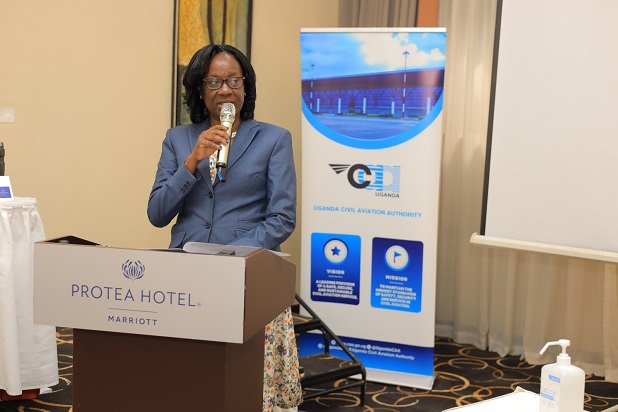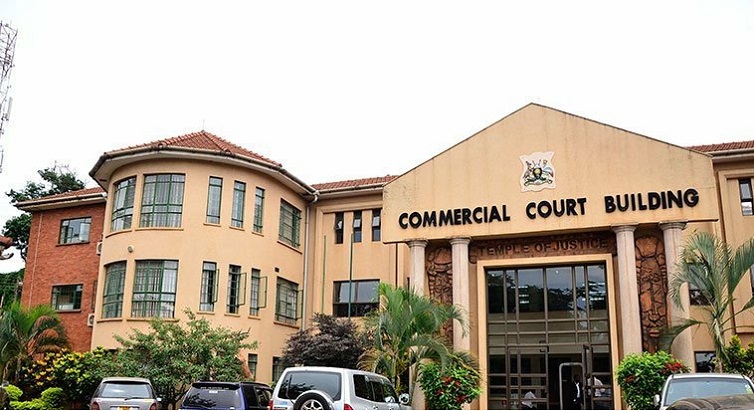


Photo montage (Left to Right): Sam Wabasa-the Managing Director and cofounder of Canaan Sites, Elvis Ndikuno-Managing Partner at Elda Advocates and Catherine Donovan Kyokunda-Commissioner Legal Services and Board Affairs at URA
Uganda’s supreme tax body, the Uganda Revenue Authority (URA), has seen a whopping Shs2.48 billion bleed from its coffers due to illegal taxation.
According to documents seen by this website, URA’s goose was cooked after Canaan Sites, one of Uganda’s biggest real estate companies, sued and defeated it over wrongful and illegal Value Added Tax (VAT) assessment and collection.
Details
On several occasions, many businessmen have complained about wrongful, illegal, or excessive taxation by URA—practices fueled by limited tax awareness. Matters are worsened by the fact that tax collection is rooted in law, yet many business owners cannot adequately or exhaustively interpret these laws.
Sadly, even those who can interpret the law are sometimes intimidated or utterly cornered into succumbing to these wrongful assessments. This is exactly what happened to Canaan Sites.
The Genesis
Documents analyzed by Business Focus show that following its incorporation in 2010, Canaan Sites started off well as a tax-compliant entity, remitting all its tax obligations as required by law.
However, in 2013, trouble started after sharply dressed URA officials stormed the Canaan Sites offices and ordered the company to begin charging VAT on land sales.
The real estate company objected, citing Clause 1(e) of the Second Schedule to Section 19 of the VAT Act (Cap 349), which categorizes undeveloped land among supplies exempt from Value Added Tax.
In its defense, the company argued that it primarily purchased large tracts of land, subdivided them into plots, and sold them undeveloped to various customers.
However, acting with the impunity that monopoly often breeds, URA proceeded to make VAT assessments and issued agency notices to Canaan Sites’ bankers. Consequently, Canaan Sites was compelled to pay VAT amounting to Shs1,756,651,736 between January 2013 and February 2017.
As a result, Canaan Sites and URA engaged in a series of negotiations and eventually the tax body agreed to refund only Shs533,125,273. This amount covered the period from January 2013 to October 2015, during which Canaan Sites was not VAT-registered.
Sadly, it has emerged that the tax body has not refunded the Shs533,125,273 to date.
Canaan Sites Seeks Redress
URA refused to refund of UGX 1,223,526,463.
Feeling aggrieved, Canaan Sites sought redress before the Tax Appeals Tribunal (TAT) in 2022. In a case filed as Application No. 228 of 2022 and heard by Proscovia R. Nambi (Chairperson), Grace Safi, and Christine Katwe, the real estate company challenged URA’s decision to deny its request for a refund of illegally collected tax.
Canaan Sites contended that the amount in question was not only erroneously collected from an exempt supply, but was also paid from its profits.
URA, however, remained adamant, arguing that Canaan Sites was not entitled to the refund and that the claim should instead have been made by the company’s customers.
TAT Rules in Favour of Canaan Sites
URA suffered a major blow when the TAT dismissed its defense.
In its ruling, the Tribunal averred that although the applicant (Canaan Sites) was a taxable person, an input tax credit could not have arisen since the underlying sales were not taxable supplies but exempt supplies. URA was therefore ordered to make the refund.
“Therefore, we find that the provision in Section 34(1) of the VAT Act does not apply to the refund claim in this case. Since input tax did not arise, it also logically follows that the applicant’s customers cannot be entitled to an input tax credit or refund,” the TAT stated in its ruling delivered on December 19, 2024.
The Tribunal further agreed with Canaan Sites’ interpretation of the VAT Act concerning refunds for overpaid tax, noting that it did not apply in this case because the refund claim arose from funds illegally collected on exempt supplies.
The Tribunal also acknowledged Canaan Sites’ references to relevant past judgments, including Biira Udear Co. Ltd v. Commissioner General URA (HCCS No. 400 of 2015) and Kikambi Gerald v. URA, which clearly established that taxes collected illegally on exempt supplies should be refunded.
On the question of who paid the VAT—Canaan Sites or its customers—the TAT ruled that URA had not provided compelling evidence to substantiate its claim that the VAT was paid by Canaan Sites’ customers and that those customers, rather than Canaan Sites, were entitled to a refund.
“The Applicant’s documentation and testimony effectively demonstrate that the VAT burden was not passed on to its customers, reinforcing its claim for the refund,” the TAT ruled.
The Tribunal concluded that URA’s retention of the unlawfully collected VAT amounted to unjust enrichment.
“This Tribunal concludes that the Respondent’s collection of VAT on the sale of unimproved land was unlawful. The Applicant has demonstrated its entitlement to the refund claimed. This Tribunal emphasizes the importance of adhering to legal frameworks surrounding taxation, particularly the treatment of exempt supplies, and affirms the rights of taxpayers to claim amounts unlawfully collected,” the Tribunal concluded.
The Tribunal ordered URA to refund UGX 1,223,526,463 to Canaan Sites within 30 days of the ruling. URA was also instructed to pay interest on the refunded amount at the prescribed rate from the date of collection until the date of payment. Additionally, URA was ordered to bear the costs of the application.
URA Appeals TAT Decision
On February 19, 2025, URA shocked observers when it appealed the TAT ruling in what appeared to be a bid to escape its self-inflicted liability.
In High Court Civil Appeal No. 005 of 2025, URA argued that the Tax Appeals Tribunal erred in law when it held that Section 34 of the Value Added Tax Act, Cap. 344, did not apply to the refund claim by Canaan Sites.
URA also argued that the TAT erred in law when it ordered URA to refund UGX 1,223,526,463, together with interest, within 30 days of the decision.
The case was heard by Justice Patricia Kahigi. Canaan Sites was represented by Elvis Ndikuno, Managing Partner at Elda Advocates, a law firm based in Kampala.
Throughout the court process, URA was represented by various lawyers from its Legal Services and Board Affairs Department, including Donald Bakashaba, Ritah Nabirye, and Amanya Rooney Mushambi, among others. URA’s Legal Services and Board Affairs Department is headed by Commissioner Catherine Donovan Kyokunda.

URA Consents in Second U-Turn
However, while the appeal was ongoing, URA entered into a consent settlement with Canaan Sites and subsequently withdrew its appeal against the real estate developer.
In a consent settlement overseen by Justice Patricia Kahigi and dated April 2, 2026, URA agreed to pay Shs2,483,383,455 to Canaan Sites within 30 days of execution of the consent.
This website understands that URA effected the payment in early May 2026.
Business Focus also understands that taxpayers could lose even more money considering that URA has not refunded the UGX 533,125,273 it had earlier agreed to return to Canaan Sites after collecting it illegally while the company was not VAT-registered. The amount in question was collected between January 2013 and October 2015.
About Canaan Sites
Founded in 2010 by Sam Wabasa and his wife, Susan Walusansa Wabasa, Canaan Sites quickly established itself in Uganda’s burgeoning real estate sector through aggressive advertising and affordable plots of land.
The company disrupted the market so significantly that within two years, it had become one of the most reputable real estate companies in Uganda.