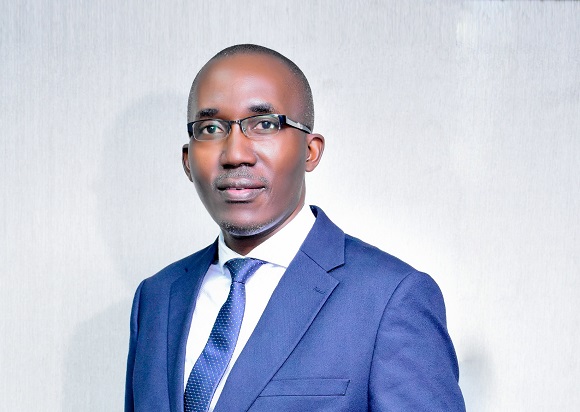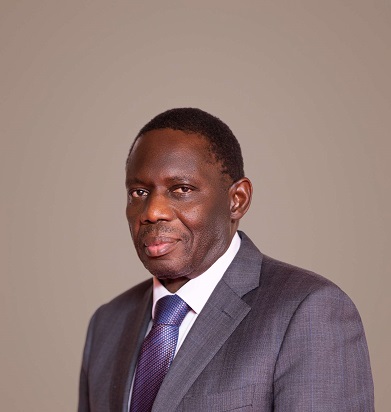

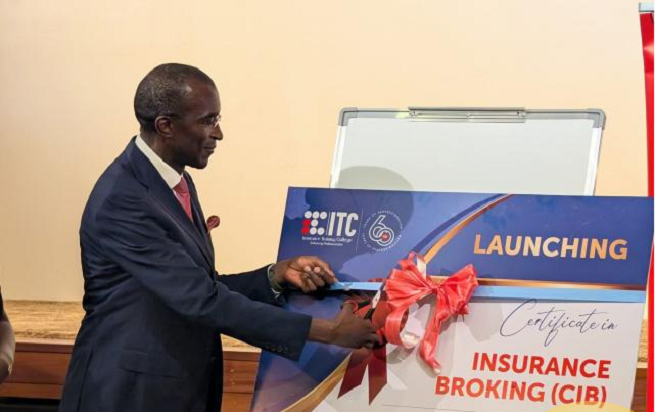
Alhaj Kaddunabbi Ibrahim Lubega officiated at the launch of Certificate in Takaful, Insurance for Non-Insurance Professionals.
Alhaj Kaddunabbi Ibrahim Lubega officiated at the launch of Certificate in Takaful, Insurance for Non-Insurance Professionals.
For decades, Uganda’s insurance sector has struggled with persistently low penetration, hovering around one percent of GDP.
Despite steady growth in the number of licensed insurers, large segments of the population remain uninsured due to affordability constraints, limited awareness, and, in some cases, ethical or religious objections to conventional insurance models.
Against this backdrop, the recent gazetting of Takaful insurance regulations marks a potentially transformative policy shift. This policy is crucial for advancing Uganda’s development goals, including financial inclusion and economic resilience. By introducing a system rooted in cooperation and ethical financial principles, it offers a tailored approach to reach underserved communities.
Scholars and regulators note that Takaful insurance has the potential to stimulate economic growth, encourage savings, and provide a safety net, supporting a more inclusive financial system in Uganda. Takaful insurance, grounded in Islamic finance principles, operates on mutual cooperation and shared responsibility rather than pure risk transfer for profit. Participants contribute to a common pool used to indemnify members who suffer losses, with any surplus distributed according to pre-agreed rules.
Although the model emerged in the 1970s alongside the rise of modern Islamic finance, it has evolved into a recognized component of global insurance markets, extending well beyond Muslim-majority countries. According to the Takaful Market Size, Share, Growth, Trends Report, 2033 (2024), the global Takaful market was valued at approximately USD 36.6 billion in 2024 and is projected to grow at an annual rate of eight to nine percent through 2033.
Although modest compared to conventional insurance, this growth reflects rising demand for ethical, transparent, and community-oriented financial products.
Despite a sizeable Muslim population, growing regional integration, and expanding Islamic banking activity, Takaful insurance remained absent from Uganda’s market until the Insurance Regulatory Authority (IRA) gazetted comprehensive Takaful and Retakaful regulations in 2025.
According to Haj Ibrahim Kadunabi Lubega, Executive Director of the IRA, the new framework formally provides for the establishment and operation of Takaful insurance under Sharia-compliant mutual assistance principles. He explains that the regulations respond to long-standing exclusion from insurance by individuals and institutions with ethical or religious reservations about conventional insurance.
“Many Ugandans have paid premiums for years without seeing value beyond compliance,” Lubega noted, pointing to Takaful’s surplus-sharing mechanism as a structural departure from conventional insurance. “In Takaful, participants are not just policyholders; they are beneficiaries of the system itself.” From a policy perspective, the regulations aim to achieve three objectives: policyholder protection through segregation of funds, financial stability through capital adequacy and governance requirements, and market confidence through enforceable Sharia governance structures.
Kenya offers a regional reference point. With Muslims accounting for roughly 15 percent of its population, Kenya introduced a dedicated Takaful regulatory framework in 2015, allowing both standalone operators and “Takaful windows” within conventional insurers. The law requires strict segregation of funds, Sharia supervisory oversight, and tailored governance structures.
Kenya’s first fully-fledged Takaful operator, the Takaful Insurance Company of Africa, was established in 2011. Its rapid premium growth—from USD 7.6 million in 2015 to an estimated USD 12 million in 2016—demonstrates that regulatory clarity can unlock latent demand. Kenya’s experience shows that Takaful need not be marginal; when properly regulated, it can bring previously excluded communities into the formal financial system while coexisting with conventional insurers.
It also highlights that niche financial products often fail not because of weak demand but due to regulatory ambiguity that deters capital, expertise, and long-term investment. Analysts agree that Uganda’s potential Takaful market is real but not guaranteed. Low insurance penetration means the overall market is shallow, and any new segment must compete with both conventional insurers and widespread informal risk-sharing mechanisms.
Dr. Abdul Hafiz Walusimbi, an Islamic finance scholar, frames Takaful as a response to “conventional dominance and unmet demand.” He notes that certain individuals, institutions, and foreign investors in sectors such as education, petroleum, and trade have historically opted out of insurance altogether due to ethical concerns, leaving significant risks uninsured. One immediate challenge is reinsurance. Benard Obel, Director of Supervision at the IRA, observes that Africa currently has limited Retakaful capacity, with Africa Reinsurance Corporation as the only active provider.
This creates sequencing problems: reinsurers often require licensed operators before committing, while regulators require reinsurance arrangements before approving products. To address these challenges, a phased licensing approach could allow operators to focus initially on limited product lines while gradually expanding as reinsurance capacity develops. Forming regional partnerships with countries that have more developed Retakaful markets could also increase capacity.
Policymakers might further incentivize foreign Retakaful providers to enter Uganda through tax benefits or simplified entry regulations.Distribution remains another hurdle. Conventional insurance in Uganda already struggles with reach and trust. Takaful operators will need innovative channels—potentially including faith-based networks, cooperatives, and microinsurance platforms—to achieve scale. Human capital is a longer-term challenge, as Takaful requires expertise that combines insurance, actuarial science, and Sharia compliance.
While institutions such as the Islamic University in Uganda and the Insurance Training College have begun offering specialized programs, the current talent pool remains thin. Misperception is also a risk. Industry leaders and regulators stress that Takaful is not a product reserved for Muslims, but an ethical insurance alternative open to all. Its appeal aligns with global trends toward ethical finance, ESG investing, and transparency-driven financial products.
If successfully implemented, Takaful could advance financial inclusion goals, particularly in microinsurance, agricultural insurance, and SME risk coverage. The mutual risk-sharing model may resonate in communities accustomed to informal solidarity systems, offering a regulated and scalable alternative. Uganda’s entry into Takaful comes later than some regional peers, but not too late. Kenya’s experience shows that early regulatory certainty matters more than market size, while Sudan’s long-standing Takaful sector and Nigeria’s hybrid model demonstrate that African markets can sustain Islamic insurance when frameworks are coherent and supervision credible.
The real test for Uganda will not be the existence of regulations, but their execution. Licensing, reinsurance coordination, product approval, dispute resolution mechanisms, and public awareness will determine whether Takaful becomes a meaningful contributor to insurance penetration—or remains a well-intentioned but marginal experiment. Barnard Obel emphasizes that regulation alone will not build a Takaful market. Success depends on coordinated action across insurers, reinsurers, banks, auditors, and educators, supported by continuous regulatory refinement.
From a Sharia perspective, he notes, idle wealth attracts obligations such as zakat, making ethical investment a compliance necessity. “Once wealth is accumulated and just kept, then we invoke another Sharia issue—and that is zakat,” he said. “That is why the operator invests these contributions. We are optimistic that investment can reduce losses, but also bring profits.” Profits are added back to the pool, claims are settled, reserves set aside, and any surplus shared among participants—reinforcing the cooperative nature of the scheme.
Dr. Walusimbi credits the IRA for creating an enabling environment, arguing that regulation—rather than religious demand alone—is what determines success. “Products can exist, but without inner will—political or institutional—they remain theoretical,” he said. He describes Takaful’s potential to deepen insurance penetration, historically stagnant at around 1 percent. “We have communities that are allergic to the conventional system. Their only option has been either to avoid insurance altogether or comply forcefully because it is a requirement,” he said.
Takaful provides those communities with a choice, potentially expanding the market organically rather than merely shifting existing customers. “If people are comfortable with the product, they will come willingly. And that is how penetration grows,” he added. Beyond domestic considerations, Dr. Walusimbi warns that Uganda risks isolation if it fails to align with global Islamic finance systems. “We can no longer afford to live in isolation,” he said. Kenya, Sudan, Malaysia, and GCC countries already operate within these systems.
Drawing parallels with past policy gaps, he cited Uganda’s failure to export beef to Qatar during the World Cup due to a lack of halal compliance, cautioning against missing future opportunities. He also sees Takaful as a catalyst for new academic programs, professional training, and financial innovation, particularly in fintech. Institutions such as the Insurance Training College and IUIU have begun introducing Islamic finance and Takaful courses. However, he acknowledges a shortage of skilled professionals, especially in Sharia governance and compliance.
Despite challenges—including regulatory gaps, limited licensed operators, potential legal disputes, and resistance to change—he stresses that obstacles should not deter adoption. “Any opportunity devoid of challenges is not worth pursuing,” he said. Finally, he stresses that Takaful is not exclusively for Muslims. “It is a product that can be consumed by any person, irrespective of religious affiliation,” he said.
Analysts note that success will depend on public awareness, professional capacity, and regulatory flexibility, but Walusimbi emphasizes a broader point: Takaful is as much about market choice and ethical finance as it is about religion. “This is about alternatives, inclusion, and missed opportunities we cannot afford again,” he concluded.
-URN