

Online lenders in Uganda have got a new layer of regulation that is aimed at professionalising the online lending business and rid it of unscrupulous operators.
The Industry Code of Conduct for Responsible Digital Lending has been developed with the aim of putting fair treatment of customers, transparency and accountability at the center of the country’s fast-growing digital credit market.
The document developed in a collaboration between the UN Capital Development Fund (UNCDF), the association of financial technology (fintech) companies (FITSPA) and the government through the ministry of finance, planning and economic development, is designed to complement the existing regulation, setting out clear, practical standards for how digital lending should work in Uganda.
It provides for fair and honest marketing, transparent pricing and terms, checks on what customers can afford, respectful collections, secure use of customer data and simple ways to raise and resolve complaints, offering “a common rulebook for providers that want to show they are lending responsibly,” FITSPA says. FITSPA will act as custodian of the code.
Members that sign up commit to board-level approval of the Code, staff training, and ongoing monitoring and reporting on their practices and customer complaints.
Explaining the importance of the code, the Chair of the Legal, Policy and Regulatory Committee at FITSPA, Kenneth Muhangi said the key reason for this self regulation tool is to enhance public confidence in the online lending industry.
He however says the growth of the Industry calls for a stand-alone legislation in addition to the existing laws that relate to money transfer, computer misuse and data protection.
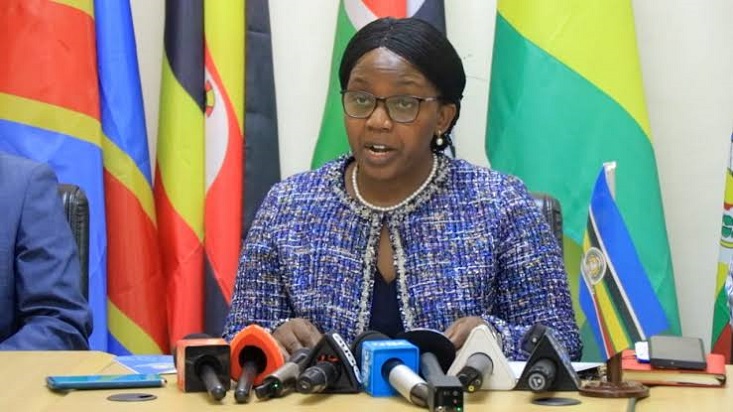
Edith Namugga Tusuubira, Commissioner of the Microfinance Regulation Department at the Ministry of Finance, Planning and Economic Development, welcomed the development, saying it would help reduce on cases of fraud, over-billing, harassment of borrowers and undue confiscation of people’s assets.
She says self-regulation by industry players eases work for national institutions.
“We shall work together with FITSPA to ensure it utilises our complaints handling process to promote responsible lending. So far, we have handled 1,000 complaints,” she noted.
She also emphasized the need for a data-driven legal framework as the world increasingly adopts digital and AI technologies, but urgcautioned against irresponsible borrowing.
“If we don’t borrow responsibly, our country won’t grow,” she said. “NDP 4 encourages credit, but we should borrow responsibly,” she said, further citing consumer over-indebtedness as one of the challenges that must be addressed.
She said that meaningful impact can only be achieved through collaboration with industry associations like FITSPA, self-assessment by lenders, and embracing global innovations.
Samantha Malambo, a Project Coordinator at UNCDF, commended the idea of an industry-led Code of Conduct for Responsible Digital Lending, urging stakeholders not to let the Code remain a document on the shelves, but to actively adopt and implement it in their operations.
She says this Code of Conduct is a step toward building a safe and sustainable digital credit market that can unlock access to finance for MSMEs, women, and youth, while avoiding issues that come with overregulation.
She concluded by reflecting on the significance of the day, noting that it is rare for industry growth to be accompanied by policy that is not only supportive but also industry-led. She described this milestone as a powerful and encouraging development for Uganda’s digital lending landscape.
The Code mainly focuses on the relationship between the consumer and the service provider on how transactions are expected to be done to leave the two parties satisfied.
Vincent Tumwijukye, Chairperson of the FITSPA board is mainly concerned about the future if the online lending business especially if micro, small and medium enterprises are mishandled by the lenders.
Despite the importance to the economy, contributing about 90 percent of employment, 70 percent of the MSMEs continue to face unmet credit needs.
He named challenges facing the industry including “predatory” lending practices, misuse of consumer data, unethical recovery methods, and the erosion of market trust, which says have threatened to undermine the credibility of digital credit.
Tumwijukye says that these issues, in some instances, almost resulted in policy responses that risked reversing the progress already made, but that the code serves both the lender and the borrower.
The two major objectives of the code are to establish clear, enforceable industry standards that guide responsible digital lending and promote sustainable sector growth, and to protect consumers by ensuring access to safe, affordable credit while empowering them to make informed decisions to improve their livelihoods.
The Chairperson warned that this Code is an actionable and enforceable framework, with penalties including public warnings, suspension and deregistration of offenders.
”By adhering to this Code, industry players will reinforce market confidence, safeguard consumers, and expand financial inclusion across the country.
“Other industries that have introduced self-regulation mechanisms include the Banking Industry where member organisations commit to abide by the rules set by the Uganda Bankers Association.
The association has also made policies which have been adapted by the Bank of Uganda to make legal frameworks binding the industry.
Mina Shahid, CEO of top online lender in Uganda Numida, and also chairperson of the stakeholder working group that spearheaded the creation of the code, says if the industry is to survive, customers must be treated well, and that this is what the code is designed to do.
-URN