

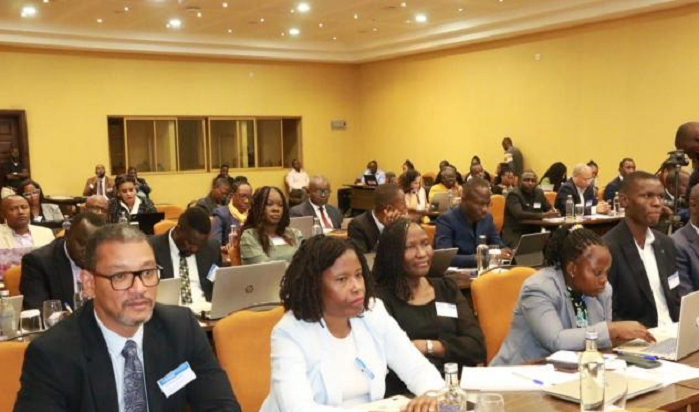
The Munyonyo meeting is aimed at building capacity to draft competition regulations
Uganda and several other African countries are yet to join the Single African Air Transport Market (SAATM), a delay that continues to make air travel across the continent expensive and less seamless compared to other regions.
Speaking at a continental aviation workshop in Kampala, Octavio Oliveira, Competition Regulation Expert at the African Civil Aviation Commission (AFCAC), said many governments remain reluctant to fully open their airspace because of fears of competition from stronger foreign airlines.
The workshop, being held at Speke Resort Munyonyo, brought together civil aviation authorities and aviation experts from across Africa to discuss competition regulations in the air transport sector. So far, 38 African countries have joined SAATM, but Uganda is still not a member, alongside several East African Community neighbours, including Burundi, Somalia, South Sudan, and Tanzania.
Oliveira admitted that the implementation of SAATM has been slower than expected due to challenges such as visa restrictions, protectionist policies, and gaps in aviation infrastructure. “Of course, it’s not the pace that we want, but we are progressing in the implementation of SAATM. We still face barriers including visa restrictions, protectionism in some member states, and infrastructure gaps,” Oliveira said.
He said AFCAC is continuing to encourage more countries to join and implement the single African air transport market, arguing that liberalised air transport would create jobs, attract investment, boost tourism, and accelerate economic growth across the continent.
The push for an open African aviation market traces back to the Yamoussoukro Declaration of 1988, in which African states agreed on the need to liberalise air transport and reduce restrictive bilateral agreements. This was later followed by the Yamoussoukro Decision, which aimed to allow airlines greater freedom to operate across African countries, including picking up and dropping off passengers in multiple destinations.
In 2023, Uganda announced plans to consider joining SAATM and proposed the formation of a multisectoral committee to study the implications of joining the initiative. The committee was expected to include representatives from the Ministries of Finance and Works, the Uganda Tourism Board, and private sector players.
Uganda Civil Aviation Authority (UCAA) Deputy Director General Olive Birungi Lumonya said liberalising air transport would increase passenger traffic and lower travel costs.
“Flying is efficient, quicker and safer, but it is still underutilised compared to other forms of transport. If Uganda signs this agreement, it will help reduce travel costs, increase air traffic and support business growth,” she said.
However, officials noted that Uganda has delayed joining SAATM partly due to concerns about exposing the national carrier, Uganda Airlines, to stiff competition.
Uganda Airlines, which was revived in 2019, is still young and yet to make a profit. There are also concerns that opening Uganda’s airspace too quickly could undermine plans to position Entebbe International Airport as a regional hub.
Some stakeholders also fear that local airlines may struggle to compete against larger regional carriers with stronger financial backing, better equipment, and government subsidies. Uganda has additionally sought assurances that the benefits of opening its skies would be mutual, amid concerns that some African countries still maintain restrictions on their own aviation markets.
The workshop was organised by AFCAC with support from the European Union Aviation Safety Agency as part of broader efforts to operationalise SAATM under the Yamoussoukro Decision.
UCAA Director General Fred Bamwesigye told participants that while liberalisation is important, it must be accompanied by fair competition and strong regulation.
“Open skies must be matched with fair competition,” Bamwesigye said, adding that effective regulatory frameworks are necessary to prevent market distortions, protect consumers, and ensure equal opportunities for airlines.
He said Uganda had already taken steps to strengthen its aviation sector, including enacting a Competition Act in 2024, establishing a Consumer Protection Unit within UCAA, and drafting competition and consumer protection regulations aligned with continental standards.
Although Uganda has not yet formally joined SAATM, Bamwesigye said the country is steadily preparing for accession through consultations and Cabinet processes. He also called on African countries that have signed onto SAATM to fully implement the agreement to support the growth and integration of the continent’s aviation industry.


