
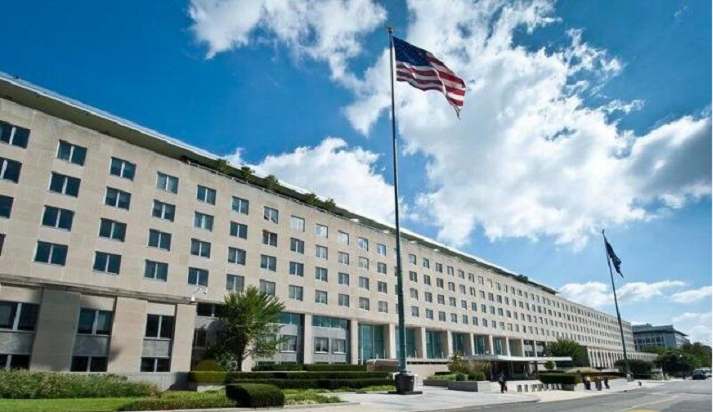
The U.S. Department of State
The U.S. Department of State
The United States has expanded its controversial visa bond pilot program, adding Uganda and more than 30 other countries whose nationals may now be required to post refundable bonds of up to USD 15,000 (approximately 54 million Shillings) before receiving short-term business or tourist visas.
The policy, administered by the U.S. Department of State in coordination with the Department of Homeland Security (DHS), takes effect on January 21, 2026, for most of the newly listed countries, including Uganda. It applies to B-1 (business) and B-2 (tourist) visa categories.
Under the program, consular officers may require eligible applicants to post bonds of USD 5,000 (about 18 million Shillings), USD 10,000 (36 million Shillings), or USD 15,000 (54 million Shillings), depending on individual risk assessments conducted during visa interviews. Payments are made through the U.S. government’s Pay.gov system.
The visa bond requirement is authorised under Section 221(g)(3) of the Immigration and Nationality Act (INA) and is structured as a one-year pilot designed to assess operational feasibility and compliance outcomes. It is primarily intended to curb visa overstays.
Applicants who comply with visa conditions, most notably by departing the United States before their authorised stay expires, are eligible for a full refund. Bonds may also be refunded if the visa expires unused or if entry is denied at the port of arrival.
However, violations such as overstaying or filing certain immigration claims may trigger further review by U.S. Citizenship and Immigration Services (USCIS), potentially affecting bond refunds. Travel under the bond program is restricted to three designated U.S. airports: Boston Logan International Airport in Massachusetts, John F. Kennedy International Airport in New York, and Washington Dulles International Airport in Virginia.
According to DHS, countries were selected based on non-immigrant overstay rates exceeding 10 per cent, as documented in the agency’s annual Entry/Exit Overstay Report. While the overall U.S. overstay rate stood at about 1.04 per cent in fiscal year 2024, officials acknowledge wide disparities across visa categories and countries.
Uganda reportedly recorded overstay rates above the threshold, placing it alongside countries such as Nigeria, Tanzania, and Zimbabwe. State Department spokesperson Tammy Bruce said the expansion reflects a data-driven approach rather than political targeting. “This pilot program evaluates whether visa bonds can serve as an effective compliance tool, based on objective overstay metrics,” she said.
The policy has sparked sharp criticism across affected countries, particularly in low-income nations. In Uganda, where the average annual income is estimated at USD 800 (2.9 million Shillings), critics argue that the bond requirement is economically prohibitive. A USD 15,000 bond would represent the equivalent of six to nearly twenty years of income for an average citizen, according to World Bank estimates.
On social media, many Ugandans have described the policy as a de facto travel ban. One widely shared post referred to it as “a soft ban disguised as a compliance policy,” reflecting broader online frustration under hashtags such as #USVisaBond.
Public confusion was fuelled by initial claims from Uganda’s Ambassador to the United Nations, Adonia Ayebare, suggesting the country might be exempt following diplomatic engagement. Those assertions were later contradicted by official U.S. documentation listing Uganda among the affected nations.
The backlash has not been limited to Uganda. Media and social media users in Nigeria, Tanzania, Mali, and Mauritania have criticised the program as humiliating and discriminatory. In Mali, authorities responded to earlier inclusion in the program by imposing a reciprocal USD 10,000 bond requirement on U.S. citizens in October 2025.
Human rights organisations have also raised concerns. Groups such as Human Rights Watch argue that visa bonds disproportionately penalise citizens of poorer countries while leaving wealthier applicants largely unaffected.
Analysts warn the policy could dampen tourism, business travel, and diaspora engagement. Uganda received an estimated USD 1.4 billion (about 5.1 trillion Shillings) in remittances in 2024, flows that could be affected if mobility declines. Although the visa bond program is formally temporary and subject to review after one year, immigration experts question its political durability.
“This mirrors restrictionist tools used during the Trump era,” said Jill Welch of NAFSA, an association of international educators. “The key question is whether future administrations will keep, reform, or abandon it.”
For Uganda and other newly listed countries, the policy has reignited debates over fairness in global mobility, and whether visa enforcement measures risk deepening existing inequalities rather than addressing the root causes of overstays.
-URN
About the Author