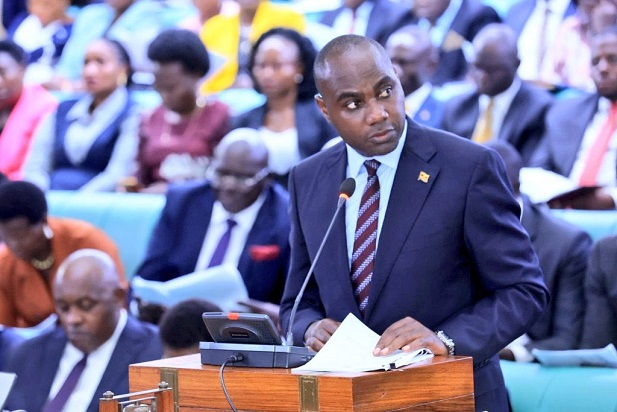

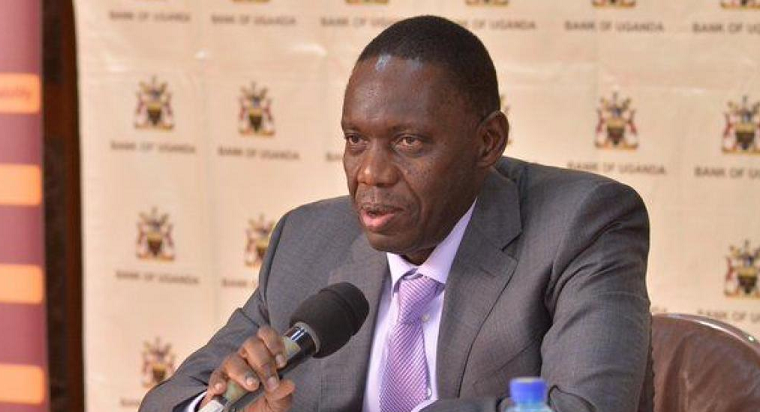
BoU Deputy Governor, Michael Atingi-Ego
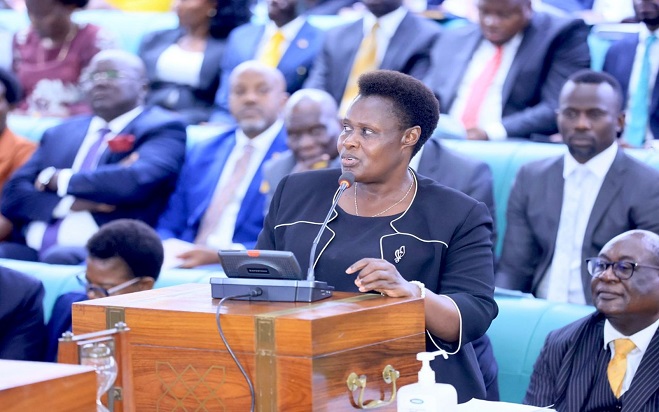
Michael Atingi-Ego, Governor, BoU
The Bank of Uganda (BoU) has revealed that risks to the inflation outlook remain elevated on the account of the ongoing conflict between Iran and Israel/ America.
“On the upside, a key risk is that the conflict could become more prolonged and lead to larger and more persistent increases in global oil prices, thereby generating broader inflationary pressures,” said Michael Atingi-Ego, Governor, BoU while issuing the Monetary Policy Statement for May 2025, where the Central Bank maintained the Central Bank Rate (CBR) at 9.75 percent. BoU says although risks arising from the conflict in the Middle East could exert upward pressure on inflation, the current monetary policy stance remains appropriate and well aligned with prevailing macroeconomic conditions.
“So far, the conflict has contributed to a depreciation of the Uganda shilling of about 5.4 percent between February and April 2026. Should Central banks in advanced economies tighten monetary policy to contain inflation, this could exert additional pressure on the shilling and consequently raise inflation,” Atingi-Ego said, adding: “Adverse weather conditions also remain a major risk to agricultural production and food prices.”
According to the Central Bank, uncertainty surrounding the duration and severity of the conflict, as well as its implications for the Ugandan economy, has clouded the outlook.
“Based on the assumption that global oil prices have peaked and are expected to gradually decline to pre-conflict levels by 2027, the near-term inflation outlook has been revised upwards, with core inflation projected to range from 5.0 to 5.3 percent over the next 12 months,” BoU says, adding that over the medium term, the effects of the oil shock are expected to ease gradually, and inflation is projected to stabilise around the target of 5.0 percent.
It should be noted that over the 12 months to April 2026, inflation remained below the medium-term target of 5 percent, reflecting the continued effectiveness of monetary policy.
Annual headline and core inflation averaged 3.4 percent and 3.5 percent, respectively. However, the conflict in the Middle East has resulted in significantly higher global oil prices and heightened uncertainty surrounding the economic outlook.
In April 2026, inflation edged up slightly as the gradual pass-through of higher energy costs began to materialise.
Headline inflation increased to 3.0 percent in April 2026 from 2.8 percent in March 2026, largely driven by energy, fuel, and utilities (EFU) inflation. Core inflation also rose marginally to 3.0 percent from 2.9 percent, while inflation for other goods remained unchanged at 2.0 percent.
“There is a strong likelihood that the oil price shock will continue to transmit through the economy in the near term, leading to increases in the prices of other goods and services. Indeed, month-on-month core inflation rose to 0.5
percent in April 2026 from zero in March 2026,” Atingi-Ego said, adding: “Although sustained increases in fuel prices could generate broader second-round inflationary pressures across the economy, it remains too early to fully assess the magnitude and persistence of these effects.”
BoU says although the Ugandan economy continues to face challenges arising from global developments and geopolitical uncertainty, it remains on an upward trajectory.
Real economic growth strengthened in the first half of FY2025/26, supported by broad-based improvements across the agriculture, industry, and services sectors.
During the first two quarters of FY2025/26, economic activity expanded at a pace consistent with the current potential growth, averaging 6.7 percent. On the expenditure side, growth was driven by strong expansion in both consumption and investment.
“High-frequency indicators of economic activity continue to point to resilience in private sector activity, signaling sustained economic expansion. Consequently, economic growth is still projected in the range of 6.5-7.0 percent in FY2025/26,” Atingi-Ego said, adding: “The forecast for GDP growth in FY 2026/27 remains broadly unchanged from the February 2026 projection round.”
While the conflict in the Middle East could alter the sectoral composition of growth, BoU says, higher global oil prices, in particular, could increase the value of Uganda’s oil exports even as they place pressure on household consumption and business costs.
“Over the medium term, economic growth is projected to average around 8.0 percent, supported by stronger export growth and increased business investment. Nonetheless, the balance of risks to the medium-term growth outlook remains tilted to the downside,” Ating-Ego said, adding that elevated geopolitical tensions continue to pose risks through persistently high energy prices, particularly if global conflicts endure.