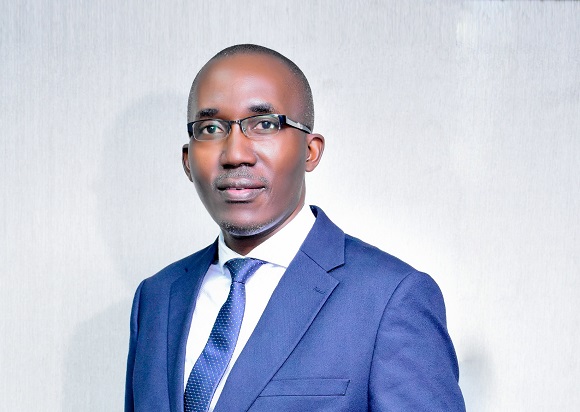


Jenifer Bamuturaki, the Chief Executive Officer at Uganda Airlines speaking at the event
Jenifer Bamuturaki (pictured), the Chief Executive Officer at Uganda Airlines has attributed the Shs237.855Bn loss the company made in 2024 on the high costs of fuel, crew allowances and aircraft depreciation.
She made the remarks while appearing before the Committee on Commissions, Statutory Authorities & State Enterprises (COSASE) during the scrutiny of the 2023/24 Auditor General’s Report.
“The highest and largest contributor to our losses is high fuel costs, followed by depreciation, and then what we call crew allowances. These have had a significant impact on our operational performance. Mark my words, I said largest contributor, now the other costs we have, we put them in two tranches, we have direct costs and we have indirect costs,” said Bamuturaki.
This followed a question raised by Medard Sseggona (Busiro East) who tasked officials from Uganda Airlines to explain reasons behind the losses and efforts being made to ensure that the national carrier stops making losses.
“The Auditor General raised an issue that the company has incurred significant loss. Whereas the net loss from the previous financial year has reduced by 26.5%, it remains a matter of concern and grave concern to us that we continue making losses, and the losses we are making are in billions of money. I think this time the losses were made to the tune of Shs237.8Bn. Tell us why we are making losses, what’s in place to reduce the losses and how can we be of assistance? Are you the problem?” Sseggona asked.
According to the Auditor General, for the past three years, Uganda Airlines has been making losses starting FY2021/22 when the Company recorded losses to a tune of Shs265.909Bn, while in FY2022/23, the Airline recorded losses to a tune of Shs323.598Bn and in FY 2023/24, the company’s losses were to a tune of Shs237.855Bn.
Although the Auditor General commended Uganda Airlines for reducing its losses last year, describing it as a positive indication of cost management and revenue improvements, he urged the Uganda Airlines Management to sustain efforts to improve revenue and reduce operational inefficiencies.
“Sustained losses may erode shareholder value and reduce the ability to sustain operations without external funding. I advised the Accounting Officer of the Airline Company to fast-track the implementation of the detailed Company Strategy that was approved to improve profitability and enhance the company’s ability to sustain the provision of services. Emphasis should be placed on cost control, revenue enhancement, efficient asset utilization, and improved working capital management to support sustainable operations,” noted by Auditor General, Edward Akol.
During the meeting, Bamuturaki informed the Committee of a number of steps the Airline has undertaken to reduce its losses noting, “The things we are doing internally, which significantly brought down the costs, the losses, is we are working hard to manage our costs. We’re renegotiating contracts. When the contracts come to an end and we have done a bidding process, we make sure that we negotiate them to the bone, and look at any clauses that are contentious that can help the airline be able to manage.”
The Auditor General also raised concerns over the contingent liabilities disclosed in the financial statements of Uganda Airlines to a tune of USD3,155,715 (Shs11.94Bn) as of 30th June 2024, primarily related to pending court cases concerning contract terminations, unpaid works, negligence claims, and the loss of baggage.
Parliament was warned that Uganda Airlines could face significant legal costs, including fees, garnishee orders, and settlements, further straining the financial resources.
According to the Management of Uganda Airlines, the contingent liability disclosed relates to pending court cases, prompting the Auditor General to caution Uganda Airlines to always seek legal guidance from the Solicitor General before terminating contracts to minimise the risk of such disputes. Additionally, urgent measures should be taken to settle the outstanding obligations to mitigate further financial and reputational risks.
About the Author