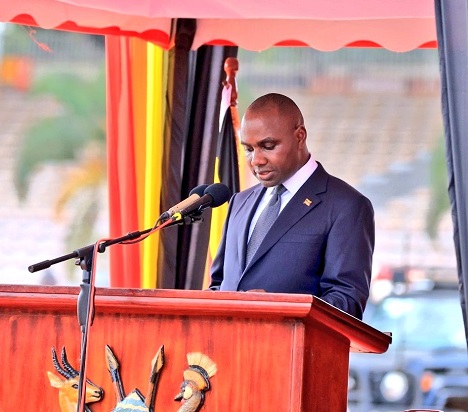


UCC Executive Director, Nyombi Thembo (2nd Right) speaking at the launch of SimuKlear system
A new system designed to block stolen mobile phones from operating has been launched by the Uganda Communications Commission (UCC). Known as SimuKlear, the initiative aims to eliminate the sale and use of stolen or counterfeit phones in Uganda.
The system, powered by a Central Equipment Identity Register (CEIR), prevents any reported stolen phone from connecting to any mobile network, rendering it useless to thieves and illegal dealers. It also enables users to confirm the authenticity of their devices before purchase.
SimuKlear, through the CEIR, stores the unique identification numbers (IMEI) of all mobile devices. When a phone is reported stolen, lost, or found to be counterfeit, it is flagged in the system and automatically blocked from accessing any network in Uganda.
Victims of phone theft are required to report the incident to the police. Once verified, UCC retrieves the phone’s IMEI number from its database and deactivates it across all networks, making resale impossible.
“Once a stolen phone is reported and verified with a police report, we will disable it permanently,” UCC Executive Director Nyombi Thembo said, adding that the innovation marks a major step toward cleaning up Uganda’s mobile phone market and protecting consumers. Thembo said that once disabled, the phone cannot connect to any network. “I am basically removing phone thieves off the streets,” he added.
Beyond curbing theft, the system helps consumers make safer choices. Anyone buying a second-hand phone can check if the device is genuine and registered before completing a purchase.
UCC’s Director for Economic Regulation, Content, and Consumer Affairs, Juliane Muhirwe, noted that SimuKlear is the result of years of consultation and collaboration with telecom operators, banks, customs authorities, and consumer protection groups.
“The CEIR is not just a technical database; it’s a tool to protect consumers, reduce fraud, and build trust in the digital ecosystem,” she said. “Your phone today is your bank, your memory, and your computer. Losing it can mean losing everything.”
Muhirwe added that the system was developed with support from international partners and will work closely with agencies such as the Uganda Revenue Authority (URA) to identify counterfeit phones at import points. It will also integrate with commercial banks to prevent fraud linked to SIM swaps and stolen devices.
The project brought together several key institutions, including telecom operators MTN, Airtel, and Lycamobile, as well as the Uganda Bankers Association, URA, and the Kampala City Traders Association (KACITA). Each played a role in shaping a system that enhances consumer protection and business transparency.
Thembo emphasised that SimuKlear represents a milestone in Uganda’s digital transformation, promoting cybersecurity and consumer confidence. “Imagine a future where stolen phones are useless and counterfeit devices are completely removed from the market; that is what SimuKlear is bringing to Uganda,” he said.
He also stressed the importance of maintaining system reliability. “Technology that sleeps is not worth trusting. This system must be active 100 per cent of the time so that when consumers report problems, we can act immediately.”
Phones, Thembo noted, have become central to everyday life, used not just for calls and social media, but also for business, education, and access to essential services.
-URN