
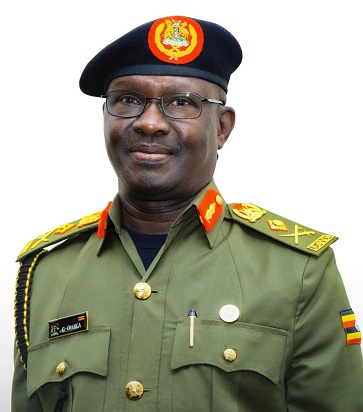
The Late Brigadier General Charles Oluka
A tribute by the Children of the Late Brigadier General Charles Oluka
On January 29, we mark one year since the passing of Brigadier General Charles Oluka, our father. One year on, the sense of loss remains profound. His absence is still felt in the quiet moments once filled with his counsel, humor and steady presence, while questions surrounding the period after his passing continue to weigh heavily on our family.
At his funeral, thousands gathered, family, friends, colleagues and citizens from across the country, to pay tribute to a man many regarded as selfless, disciplined and deeply committed to public service. The turnout reflected the esteem in which he was held and accentuated the impact of his work across Uganda’s security institutions, where his passing left a gap.
To his parents, Martin and Rose Akullo Emuku, the loss of their firstborn son was deeply painful. To us, his thirteen children, it meant losing a father who was our guide, protector and teacher. Within the Internal Security Organisation fraternity, he was remembered as a reform-minded leader who valued professionalism, institutional growth and human dignity.
We often reflect on how humbled he would have been by the tributes paid in his honour. True to character, he would likely have deflected attention from himself, insisting that service to country was a duty rather than a personal achievement.
Much of Brigadier Oluka’s life was dedicated to the State. Long deployments and extended absences were part of that calling. Yet whenever he returned home, he was fully present. Our home was filled with music, laughter and storytelling. He shared lessons from his service, some drawn from difficult operations, others from lighter moments, always balancing seriousness with humor.
In later years, he took pride in recounting his journey, from his early education at Ousia Primary School, through his aviation career as an aircraft engineer and instructor, to his service in the UPDF and later the Internal Security Organisation. Even then, he continued to pursue further studies, including in Information Technology, encouraging us to value learning as a lifelong pursuit.
We learned early that time with him was a gift. Having faced danger in the course of duty, he often spoke with gratitude for preservation and reflection, mindful that many colleagues did not return home. These conversations shaped our understanding of courage, faith and responsibility.
Beyond his official roles, our father was widely known as a problem-solver and a generous man. He quietly supported education, medical care and daily needs for many people, often without recognition. His advice—practical and frequently delivered with humor, helped ease burdens and restore hope.
However, events following his death added to our sorrow. Within the family, disagreements emerged during a period that might otherwise have been guided by unity and reflection. These developments have been distressing and difficult to reconcile with the values our father stood for.
At the ancestral home in Ousia, where our father lay before burial, some of his children were unable to participate fully in mourning rituals due to restricted access under circumstances that remain unclear to us. This experience was deeply painful, coming at a time when the family sought only to grieve together.
Differences also arose regarding burial arrangements. Alternative locations were proposed, and although decisions were ultimately made by elders, the disagreements lingered. Since then, traditional avenues for family dialogue, including clan meetings, have been limited, with legal processes increasingly taking their place.
Following the burial, questions were raised within the family about estate management and access to information. Some family members felt excluded from consultations on property and documentation, including the issuance of the death certificate, which formally recorded the cause of death as undetermined pending further clarification.
In the months that followed, changes to company and property records and the removal of items from the village home became further points of concern. Appeals from elders for restraint and inclusive dialogue were made, though consensus proved difficult to achieve.
Processes at the Administrator General’s Office proceeded amid differing expectations among beneficiaries. Some family members expressed concern about participation and the scope of matters considered, particularly regarding marital status and estate assets. These concerns remain unresolved.
An attempt at reconciliation was made on June 26, 2025, during which misunderstandings were acknowledged and forgiveness sought. Commitments were made toward a more inclusive approach, though subsequent developments suggested that rebuilding trust would require sustained effort.
At the centre of these challenges is a fact well known within the family. Our father never divorced Mama Rose Amongin Oluka. Even amid grief, she consistently called for unity and peace—principles our father lived by.
One year later, as we remember Brigadier General Charles Oluka, we do so not only as a senior public servant, but as a father whose legacy calls for dignity, understanding and respect for both family and institutions. Our hope remains that, in time, dialogue and goodwill will prevail, allowing his life and service to be honoured in a manner befitting his contribution to the nation.
About the Author