
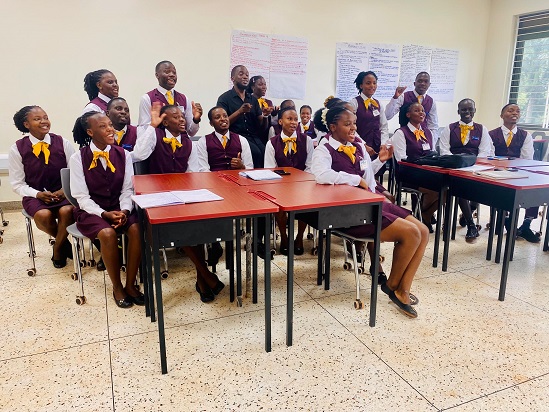
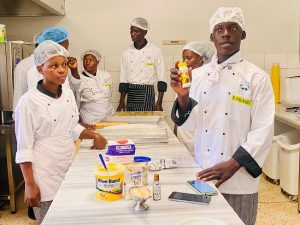
Through support from The European Union, hundreds of young people from refugee-hosting communities such as Nakivale, Rhino Camp, and surrounding regions, as well as youth from Busoga, have received hospitality and hotel services training.
Through support from The European Union, hundreds of young people from refugee-hosting communities such as Nakivale, Rhino Camp, and surrounding regions, as well as youth from Busoga, have received hospitality and hotel services training.
By Prisca Wanyenya
Uganda’s ambition to position itself as a leading tourism destination is gaining momentum, driven by strategic investment in skills development and workforce training. At the center of this transformation is the Jinja-based Hotel and Tourism Training College (HTTC), which is rapidly emerging as a key institution in strengthening Uganda’s hospitality sector.
Recent infrastructural development at the college has significantly elevated its capacity to train a globally competitive tourism workforce. Expanded facilities now include a modern application hotel, upgraded training kitchens, a computer laboratory, lecture rooms, a multipurpose hall, and other critical learning spaces designed to align hospitality education with international standards.
A major force behind this progress is The European Union, whose investment in youth skills development and vulnerable communities is reinforcing the connection between education, employability, and economic inclusion in Uganda’s tourism sector.

Building Uganda’s Skills Pipeline
Through support from The European Union, hundreds of young people from refugee-hosting communities such as Nakivale, Rhino Camp, and surrounding regions, as well as youth from Busoga, have received hospitality and hotel services training. This investment is equipping young Ugandans with practical, market-relevant skills that can directly improve livelihoods and expand participation in Uganda’s growing tourism economy.
In addition, The European Union has supported the establishment of a Job Centre at HTTC, which has already equipped over 2,000 youth with essential employability skills, including CV writing, job readiness, and career development support.
As Uganda’s tourism sector continues to expand, building a skilled workforce remains essential to sustaining growth. By investing in youth and human capital, The European Union is helping Uganda prepare for the opportunities of tomorrow.
Driving Digital Access and Opportunity
The Job Centre is also becoming a vital digital bridge between employers and job seekers, offering young people access to tools and resources they may otherwise struggle to reach. Through this support, youth can digitize their professional profiles, improve access to employment opportunities, and strengthen their competitiveness in an increasingly digital labor market.
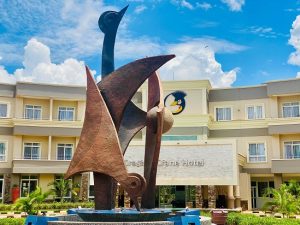
The European Union’s contribution to digitization and institutional capacity building is helping HTTC evolve beyond a traditional college into a broader ecosystem for workforce readiness.
Revitalizing Practical Learning
A major milestone in HTTC’s transformation is the reopening of its training hotel facility, which will serve both as a practical learning environment and a platform for students to gain real-world hospitality experience.

This hands-on model ensures that graduates are not only academically prepared but also equipped with industry experience—an essential factor in improving employability and entrepreneurship outcomes.
Delivering Results for Uganda’s Youth
The impact is already visible. A significant majority of HTTC graduates secure employment within months of completing their studies, while others are creating their own businesses, signaling a growing shift in how Uganda’s youth view tourism and hospitality careers.
By supporting inclusive education, practical training, and digital empowerment, The European Union is helping shape a stronger, more resilient tourism workforce for Uganda.
As Uganda looks to the future, HTTC stands as a powerful example of how targeted investment in people can unlock national potential. Through its commitment to skills, inclusion, and opportunity, The European Union is not only supporting education—it is helping build the foundation for Uganda’s tourism-driven prosperity.