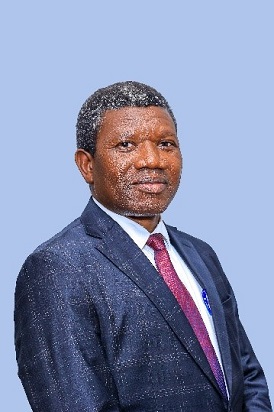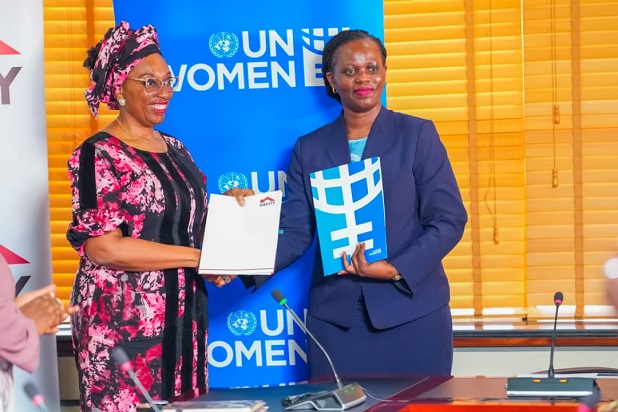


Officials at the Small Claims Procedure (SCP) Annual Performance Review and Gala in Kampala.
The judiciary has revealed that Small Claims Courts recovered 14.9 billion shillings for citizens in the 2024/2025 financial year, which they say indicates the growing impact of accessible justice across the country.
Small Claims are commercial disputes whose subject value is not more than 10 million shillings. Most of these normally arise from failure to pay rent, supply of goods, and debts among others.
At the early demand notice stage alone, courts disposed of 19,211, unlocking 4.63 billion shillings even before a single hearing.
This is according to Principal Judge Lady Justice Jane Frances Abodo.
Abodo stated that these funds have flowed back into communities, enabling citizens to pay school fees, revive stalled businesses, settle debts, and restore livelihoods, illustrating the tangible benefits of a responsive judiciary. Addressing the Small Claims Procedure (SCP) Annual Performance Review and Gala at the Court of Appeal Conference Hall on Thursday Night, Lady Justice Abodo congratulated the winners and praised the judiciary for achieving a remarkable 100 percent clearance rate at claim level, with 5,778 claims filed and 5,765 disposed.
She noted significant improvements in efficiency, noting that the average lead time for cases dropped from 151 days last year to 103 days this year. She explained that Courts such as Namungalwe and Kalungu have consistently delivered judgments within statutory timelines, setting a standard for others to follow. “The speed, fairness, and dignity encountered in these courts define public perception of justice,” Lady Justice Abodo said. She added that for many Ugandans, the first experience of the judiciary is through the Small Claims Court, making it a critical touchpoint for restoring public confidence in the administration of justice. Justice Geoffrey Kiryabwire, Chairperson of the SCP Implementation Committee, reflected on the growth of the procedure since its inception in 2011.
He said that the amount recovered has increased tenfold, from 1.5 billion shillings in the first year to 14.9 billion now, which emphasizes the system’s remarkable expansion and efficiency.
Justice Kiryabwire also noted that 90 percent of decisions are paid without the need for execution, demonstrating high compliance among citizens.
The Constitutional Court/ Court of Appeal Judge Kiryabwire added that Uganda’s SCP model is as a source of inspiration for other countries, revealing that Namibia’s Chief Justice requested Uganda’s materials to establish a similar system in their courts.
Acting Chief Registrar Her Worship Pamella Lamunu Ocaya described the SCP as a deeply rooted reform that has grown from six pilot courts to 223 courts nationwide.
She emphasized that many disputes are resolved at the demand notice stage, demonstrating that the mere existence of an accessible legal path encourages early settlements and strengthens trust in the judiciary.
“This year’s performance shows that simple, fast, and affordable justice is not merely an ideal, but a lived reality for thousands of Ugandans,” she said.
Her Worship Mastula Mulondo, Assistant Registrar in charge of the Small Claims Procedure Registry, said the SCP has matured into one of the judiciary’s most practical tools for widening access to justice.
She reported that the total amount recovered this year represents an increase of over 738 million shillings compared to the previous year, while executions fell from 1,050 to 939, reflecting better compliance with court decisions.
Mulondo noted that certain courts, including Mengo, Makindye, Nakawa, Kasese, and Tororo, continue to demonstrate strong utilization of the procedure, while other courts recorded low or zero activity, thus the need for continuous public sensitization, training, and support supervision.
The judiciary has also worked to improve efficiency and accountability through registry strengthening, regional review meetings, court-based coaching, and pre-rollout assessments in various stations.
These interventions have contributed to better data quality, enhanced case management, and stronger engagement from magistrates and court staff, according to Mulondo.
The Judicial leaders said there is the need for maintaining discipline in case management, consistency in decision-making, and accountability across all courts.
They reminded judicial officers and staff that the SCP was designed for ordinary citizens, many of whom are self-represented and have limited formal education, and that courts must continue to offer clear, respectful, and accessible processes.
The evening concluded with a gala celebrating outstanding performance, with Hakibaale Magistrates Court awarded as the best-performing court.
The event, moderated by Judiciary Public Relations Officer HW James Ereemye Jumire Mawanda, featured awards, cake cutting, and celebrations, marking thirteen years of the Small Claims Procedure as a transformative pillar of citizen-focused justice in Uganda.
-URN