
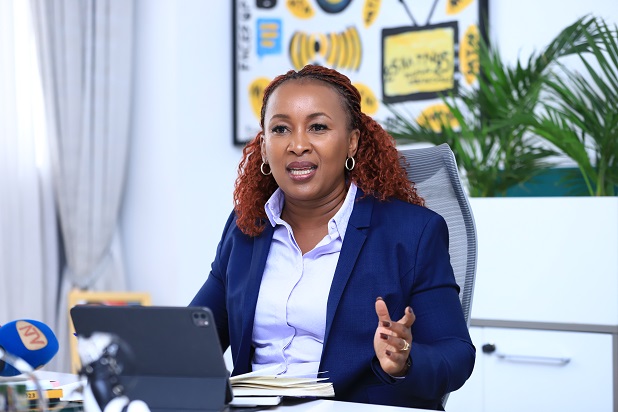
MTN Uganda CEO, Sylvia Mulinge.
MTN Uganda Chief Executive Officer, Sylvia Mulinge
MTN Uganda has reported strong financial results for the year ended December 31, 2025, reflecting growing demand for connectivity and digital financial services as Uganda’s digital economy continues to expand.
Service revenue increased 13.4% to Shs3.6 trillion, supported by rising internet usage and higher volumes of mobile money transactions. Earnings before interest, tax, depreciation and amortisation (EBITDA) rose 17% to Shs1.9 trillion, reflecting operational efficiencies alongside continued investment in network expansion.
Profit after tax grew 5.8% to Shs678.8 billion, although the figure was affected by a Shs110.9 billion one-off tax settlement with the Uganda Revenue Authority earlier in the year. Excluding the settlement, underlying profit increased 23.1% to Shs789.7 billion, highlighting the strength of the company’s core digital services business.
Growth during the year was largely driven by rising internet adoption as businesses, schools and households increasingly rely on digital platforms. Data revenue increased 28.8% to Shs1 trillion, making it the company’s fastest-growing segment. The number of active data users grew 18.6% to 12 million, while the total subscriber base increased 10% to 24.2 million, highlighting the growing importance of reliable connectivity across the country.
Mobile money services also continued to play a central role in Uganda’s digital economy. Fintech revenue increased 17.3% to Shs1.1 trillion, supported by 14.7 million active users on the platform. During the year, customers carried out 5 billion transactions worth Shs195.5 trillion, underlining the scale of digital payments, savings and lending services across the economy. MTN Uganda’s mobile money ecosystem now supports more than 241,000 agents and 114,800 merchants, enabling businesses in both urban and rural areas to accept digital payments and serve customers more efficiently.
To support the country’s growing demand for connectivity, MTN Uganda invested Shs549.4 billion in network infrastructure during the year, expanding 4G population coverage to 88.6% while continuing the rollout of 5G services in key urban areas. The company says continued investment in network infrastructure remains central to enabling digital inclusion and economic participation, guided by its belief that everybody deserves the benefits of a modern connected world.
MTN Uganda Chief Executive Officer Sylvia Mulinge said the company remains focused on strengthening connectivity and expanding digital services across the country.
“Reliable connectivity is the foundation of a modern digital economy. Our continued investment in network infrastructure is about ensuring that individuals, businesses and communities across Uganda can access the opportunities created by a connected world,” she said.
Beyond its operational performance, MTN Uganda continues to make a significant contribution to the national economy. In 2025, the company contributed Shs1.5 trillion in direct and indirect taxes to government. Through the MTN Foundation, it also invested Shs5.1 billion in community projects supporting education, healthcare and digital inclusion, reaching more than 22,400 beneficiaries.
The Board has proposed a final dividend of Shs8.25 per share, bringing the total dividend for the year to Shs28.75 per share, equivalent to Shs643.7 billion returned to shareholders. MTN Uganda remains the largest listed company on the Uganda Securities Exchange, reflecting investor confidence in its long-term growth strategy and role in the country’s digital transformation.
Looking ahead, the company expects demand for connectivity and digital services to continue rising as more Ugandans adopt internet services and digital financial platforms. MTN Uganda maintains its medium-term outlook of upper-teens service revenue growth while sustaining EBITDA margins above 50%, supported by continued investment in network capacity and digital platforms.