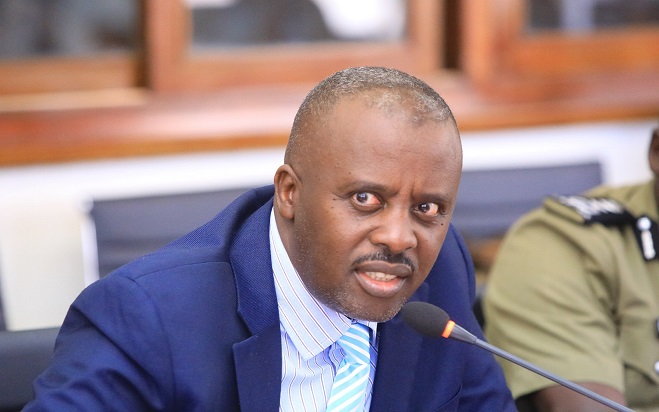


Tanzanian businessman, Azizi Rostam
Tanzanian businessman, Azizi Rostam
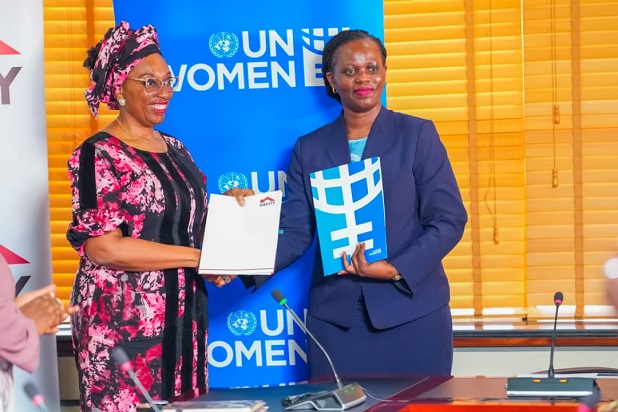
The Aga Khan Fund for Economic Development (AKFED) has reached an agreement to sell 100% shares in the Nation Media Group to Tanzanian businessman, Azizi Rostam.
For more than six decades, the Aga Khan Fund for Economic Development (AKFED), part of the Aga Khan Development Network (AKDN), has been the majority shareholder of Nation Media Group and has played a defining role in building one of East and Central Africa’s most respected independent media institutions.
The announcement revealed that the Fund agreed to sell its 100% shareholding in NPRT Holdings Africa Limited, to Taarifa Ltd (NPRT Holdings Africa Limited currently holds a 54.08% shareholding in Nation Media Group PLC).
“This transaction marks the conclusion of AKFED’s 66-year association with Nation Media Group, a journey that began in 1959 with the founding of what would become the Nation Media Group and has helped grow the organisation into a multi-platform media group serving audiences across Kenya, Uganda, Tanzania, Rwanda, and the rest of Africa,” said Nation Media Group CEO and MD, Geoffrey Odundo in a letter to staff on Tuesday.
He added that the proposed purchaser, Taarifa Ltd, is owned by East African businessman and entrepreneur Mr Rostam Azizi, who has previous experience in the regional media sector, including as a co-founder and shareholder of Mwananchi Communications Limited in Tanzania.”
According to Odundo, Completion of the transaction is subject to regulatory approvals across the jurisdictions in which Nation Media Group operates and is expected to take approximately three to four months.
During this period, Odundo said that “our work will continue with the same focus and responsibility that have defined the Nation for decades.”
Odundo said the Board and Management will continue to oversee the company, while “our teams across the region will remain committed to delivering credible journalism and content that empowers and influences the societies we serve.”
” As we move through this transition, our mission remains unchanged, and we will continue to serve with the professionalism, independence, and public interest journalism that have long defined us. We will continue to keep you informed as the regulatory process progresses and further updates become available,” said Odundo.
Who’s Rostam Abdulrasul Azizi?
Born on 21 August 1960, Azizi a self-made Tanzanian billionaire, business magnate, economist and former politician. Rostam investments range from telecoms, energy, mining, agriculture, media, real estate, port facilities and services. He holds a Bachelor in Economics from Exeter, United Kingdom.
In 2013, according to Forbes Magazine, he was the first Tanzanian dollar billionaire with a net worth of over 10 billion dollars, and according to Henley & Partners Africa wealth report 2022, was the only dollar billionaire in East Africa.
He represented the Igunga constituency in Tabora Region from 1994 until his resignation in 2011.
He was the ruling party Chama Cha Mapinduzi (CCM) National Treasurer from 2005 to 2007 and member of the Politburo/Central Committee of CCM from 2006 to 2011. As an MP, he pioneered community health insurance in East Africa and every household in his constituency was provided with health insurance from the Community Health Fund.
He also achieved access to water for every resident in his constituency and Igunga Constituency became the first district to have a dispensary in every village and electricity in every ward.
According to Forbes magazine, Aziz owned nearly 18% of Vodacom Tanzania, the country’s largest mobile phone company, with 15 million subscribers. Aziz, via Cavalry Holdings, previously owned 35% of the company, but in May 2014 he sold 17.2% of Vodacom Tanzania to Vodacom Group of South Africa for an estimated $250 million.
In 2019, he sold his remaining stake in Vodacom Tanzania through his investment vehicle Mirambo Holdings for USD$ 220 million.
He owns MIC Tanzania Plc (TIGO Tanzania and Zantel Ltd), Taifa Gas Group, Caspian mining, a contract mining firm in Tanzania, and real estate in Dubai and Oman. Aziz got his start in his family’s trading business and then branched out on his own.
What does this deal mean?
Bernard Mwinzi, one of the former top editors at NMG based in Nairobi, Kenya, says for more than 60 years, NMG was an unusual institution in African media; it was owned not by a political family or a commercial conglomerate, but by a development agency tied to the Aga Khan network.
That structure, he says, gave it a degree of insulation from the political and business pressures that often shape editorial agendas in the region.
“Now, AKFED’s exit signals the end of that model. And, for many journalists who were, and continue to be, polished by this machine, it is hard to fathom the fact that once the transaction closes, the global development institution that founded ‘Taifa Leo’ and the flagship ‘Daily Nation’ those many decades ago will have no involvement at all in the company,” Mwinzi says, adding: “In practical terms, this means one of East Africa’s most influential media organisations is moving from philanthropic stewardship to private ownership.”
The buyer is not new to media. In the early 2000s, he helped launch a fairly successful media enterprise in Dar es Salaam, and managed the biggest newspapers there (‘Mwananchi’, ‘The Citizen’ and ‘Mwanaspoti’ through Mwananchi Communications, which was later acquired by NMG.
“When NMG came knocking, Rostam took the billions and invested them in New Habari in 2006. He also ventured into broadcasting with the Dar-based Channel Ten, DTV, Classic FM and Magic FM. Aga Khan had been on a media expansion blitz in the region, and had just snapped up ‘The Monitor’ in Uganda and turned it into the Kampala’s most successful newspaper,” he writes, adding: “Rostam’s wider business empire is far larger, spanning mining, telecommunications, ports, agriculture, real estate, construction and energy. He recently launched Taifa Gas at a presidential function in Mombasa, and at the time appeared eager to sink his tentacles deeper into the vibrant Kenyan economy. But even as he explores opportunities this side of the border, why acquire a struggling media company? And, most crucially, is he his own man? From a purely financial perspective, this is not an obvious investment. But from a strategic influence perspective, it makes a lot of sense. Ownership of a major regional media house offers something that many other industries cannot; and that’s agenda-setting power.”
Nation Media Group operates across Kenya, Uganda, Tanzania and Rwanda, reaching tens of millions of readers and viewers through newspapers, television, radio and digital platforms.
According to Mwinzi, control of such an institution provides proximity to political elites, influence over public narratives, and considerable reputational capital.
“For a businessman with interests in such heavily regulated sectors as energy, telecommunications, and ports, that influence can be valuable. This, of course, does not automatically mean editorial interference, but it explains why media assets often attract investors whose motives extend beyond profit,” he says, adding: “Formally, the transaction does not affect employment arrangements and no redundancies have been announced. Management decisions will remain with the NMG board, though the new majority shareholder may nominate directors once the deal completes. It is, however, understood that two long-standing AKFED-linked directors will resign upon completion of the transaction.”
Under Aga Khan, he says, NMG built an imperfect but real reputation for defending editorial independence even during politically difficult periods. “Whether that culture survives under new ownership will be interesting to watch, and I’m sure media scholars, analysts and critics will keep an eye on any subtle shifts in editorial priorities, investigative appetite, and the kinds of stories that quietly disappear,” he says.
In the short-term, the company will still benefit from regulatory checks. Rostam says he does not intend to buy out minority shareholders or delist the firm, which means the company will, at least in the meantime, remain listed on the Nairobi Securities Exchange and cross-listed in Tanzania, Uganda and Rwanda.
“Much still remains unknown about this deal. Could an unseen hand, for instance, emerge from the shadows in the near future and claim a controlling stake by acquiring majority shareholding? Would any amount of aggressive investments in digital transformation help NMG regain momentum? Would the company survive should influence become the primary currency, rather than the business of journalism? Whichever way this thing goes, the heirs of Aga Khan empire have placed the region’s most influential media house firmly within the orbit of East Africa’s emerging class of cross-border business elites,” Mwinzi writes.