

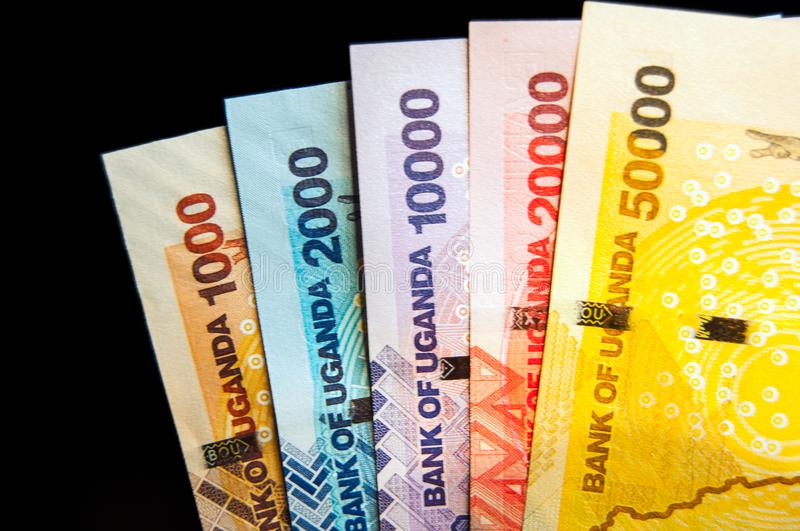
The Uganda Shilling has strengthened against all peer currencies
The Uganda shilling has remained stable despite ongoing uncertainty in global markets.
According to the Bank of Uganda, the Uganda Shilling closed October 31, 2025 trading at 3,472.05/3,482.05 against the US dollar.
In August 2025, the Uganda shilling appreciated by 4.3% relative to August 2024, according to BoU’s State of the Economy report for September 2025.
“This performance was largely attributed to stable foreign exchange inflows from offshore investors, mainly for undertaking investment in treasury auctions and remittances, as well as coffee and cocoa export receipts,” BoU’s says in its report.
It adds: “Net inflows in the interbank foreign exchange market stood at USD 73.3 million in August 2025, up from USD 23.7 million in August 2024; the volume remained adequate to support the market. The de-anchoring of global trade away from the U.S. dollar also supported the strengthening of the shilling. This has led to the U.S. dollar index weakening against major trading partners as U.S. trade policy seeks to realign its trade deficit.”
In August 2025, the report says, the nominal effective exchange rate (NEER) appreciated by 3.5% year on year, reflecting a stronger shilling against a basket of other currencies.
“Notably, the Uganda shilling outperformed all peer currencies supported by financial market reforms and prudent monetary policy, registering a marginal annual appreciation of 0.3% between 2021 and 2025, the strongest performance among its trading partners,” the report reads in part.
However, BoU warns that the shilling remains exposed to upside risks, with several developments likely to generate depreciation pressures in the near term.
“First, there is a risk of further reduction of development aid and NGO inflows as major donor countries pursue fiscal consolidation and shift spending priorities toward domestic needs. The United Kingdom, for example, has committed to reducing its aid budget to 0.3% of gross national income, while other traditional partners like the Netherlands have signaled similar cutbacks. A decline in aid related foreign exchange inflows could weaken market liquidity and exert pressure of depreciation, especially if not offset by alternative sources of inflows,” BoU’s latest report on the state of the economy further explains.
Second, BoU says, Uganda’s coffee export earnings face downside risk from falling global prices.
The report says benchmark prices for Arabica and Robusta coffee have declined amid improved harvest prospects in major producing countries such as Brazil, Vietnam, India, and Indonesia, which are expected to boost global supply significantly.
Third, the report notes, heightened geopolitical tensions in key trade corridors (specifically, the Middle East, the South China Sea, Thailand, and Cambodia) could disrupt global supply chains and shipping routes.
“Escalation of tensions in these regions may increase freight costs, delay shipments, and reduce investor confidence, leading to tighter global financial conditions and capital outflows from emerging markets. Together, these risks could increase pressure on the shilling through both trade and financial channels,” the report reads in part, adding: “However, a few downside risks could lead to further appreciation in the near term. First, the global shift away from the U.S. dollar as a preferred reserve and settlement currency has contributed to a weaker dollar, creating upward pressure on frontier market currencies, including the Uganda shilling.”
Second, the report says, strong foreign exchange inflows from export earnings on minerals, notably gold, whose price maintains an upward trend, could further support appreciation of the shilling.
Lastly, BoU says, remittances remain historically resilient, providing a stable source of foreign currency, and are expected to remain steady throughout the year.
“These factors, individually and collectively, could sustain the shilling’s strength in the short term. The balance of risks in the near term is tilted to the downside,” BoU concludes.