
Property Tax in Uganda is governed by the Local Government (Rating) Act 2005, but two decades after the law was made, conflicts persist between property owners and the authorities.
It could be because of the reluctance by the authorities to enforce it or an ineffective mode of enforcement over the time, until recently the new directives were made. It got even more critical when the Uganda Revenue Authority intensified the enforcement of the Rental Income tax.
While the two are related, they are collected differently and by different authorities. Rental Income Tax is collected by URA on the income one earns from renting out their property.
Under the Local Government (Rating) Act, 2005, property rate is levied by a local government like Kampala Capital City Authority (KCCA) depending on the location of the property, on property or hereditament, that is, ‘’any physical attachment on land or building (industrial or non-industrial) or structure of any kind excluding vacant sites.
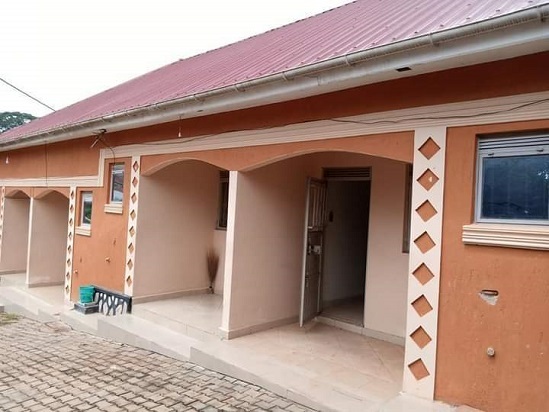
Simply, it is a tax on all immovable property or buildings, commercially managed like schools, rented houses, rented shops, factories, Hotels, Private and Public Universities and any part of which is used for the purpose of business even if it is owner-occupied.
Joshua Kato, a resident of Komamboga Central Zone in Kawempe Division says he occupied his residential house upon completion of its construction in 2002 and has never used it or any part of it for any commercial purpose.
He was, therefore, stunned when city authorities delivered to him demand notes for UGX 3.8 million “being the rate outstanding as at 1st July 2025”. While all the other personal details were correct, the note read “Kyebando Central Zone ” as the location, instead of Komamboga.
The payment statement indicated that he had not remitted any money since 2019 at an annual rate of UGX 349,500, in addition to annual penalties, on the property with a ratable value (the net annual rental value of the property ascertained in accordance with the Local Government Rating Act less a conservancy allowance) of UGX 5.825 million.
The Local Government (Rating) Act provides for a rate of between 0 percent and 12 percent of the ratable value but not below UGX 2,000. It also provides for a 2% penalty per year for the period that the rate remains unpaid.
Section 6(1) provides that the person liable for payment of the rate shall be the owner of the property in respect of which the assessment is made.
Therefore, anyone who owns a building which is used for commercial purposes (including residential rented properties) is eligible and obliged to pay.
On June 23, 2023, KCCA announced new adjustments in the property rates regime in Kampala as approved by the Council. Under the new regulations, property rates in Kampala were categorised into three bands, in accordance with the ratable value of the property, a move they said was aimed at creating fairness among property owners.
Properties with a ratable value exceeding UGX 5 million were subject to a rate of 6 percent, while those between 3 and 5 million would be charged a rate of 4%.
For properties with a ratable value of less that UGX 3 million, a rate of 1 percent would apply, provided it is not below UGX 2,000.
This lower rate was aimed at supporting small property owners and provide relief for their businesses, according to Doreen Nyanjura, the Deputy Lord Mayor.
Failure to pay in time
When the property owner fails to respect the demand note within the specified time, KCCA may apply to the magistrate having jurisdiction within the area for a summary warrant to recover the amount from the person liable.
This action is supposed to be effected within six years after the rate became due.
The Authority may serve a notice to the person or persons paying rent to the property owner to pay it to the authority until those arrears and interest have been duly paid.
Kawempe Division Mayor, Emmanuel Sserunjogi says he receives complaints from renters about the harsh enforcement style of KCCA officers who raid and seal off their premises demanding for property rates.
Dispute on amounts payable
Property owners also find challenges regarding the payable amounts. To confirm the amount reflected on the demand, the taxpayer can demand for a valuation list certified by the Valuation Office or Executive Director of KCCA or Town Clerk of KCCA Division Urban Councils to be a true copy.
The regulations insist that the tax is on the property, meaning that when it is transferred to another owner, the new owner bears the burden of the tax arrears.
However, the regulations prohibit registration of the transfer of any property unless a certificate that no arrears of rates are due in respect of that property has been issued by the Authority.
Properties that are exempt by law include official government residences, places of worship and their exclusively-used residences, public cemeteries and crematoria, and charitable or educational institutions used exclusively for those purposes. These do not pay property rates.
KCCA recently launched valuation courts in the city divisions to handle objections from the public regarding property rates imposed by KCCA. The commercial division of the High Court also handles complaints from aggrieved parties.
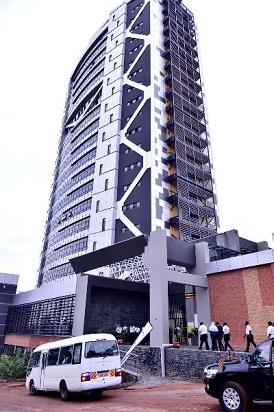
In September this year, the Commercial Court made a ruling in an 18-year dispute, in which KCCA wanted Twed Towers to pay UGX 151.7 million. However, court sided with Twed which wanted the expenses on the construction of the roads to the facility deducted. Court ruled that KCCA was entitled to only UGX 43 million.
The enforcement of the Property Rates or Property Tax is one of the major sources of tax disputes especially at local government level.
Some of the complaints or disputes include disagreements on whether a property is taxable (and at what rate) or not, and the way the tax arrears are recovered by the authorities.
However, for Kato, KCCA says that there should be proof that Kato has never rented out his house, as he claims, even though he can currently prove that he uses his house entirely for his own and his family residence.
KCCA Spokesperson, Daniel Nuwabiine did not respond to requests for an explanation from the authority. However, an official in the revenue department advised Kato to go to the respective divisional offices and explain himself. She says that he should have responded to the demand notices long ago (since 2018 when the statement was first made), including when there was a chance to challenge anomalies in the courts of law.
“The statement reads 2018. A full roll ended without any complaint (from Kato), a new roll has been added. There was court time to listen to such challenges, (but) the person didn’t appear,” she says on condition of confidentiality as she is not authorised to speak for KCCA. “It becomes tricky to convince someone that the place has never been rented. That is why I am advising he goes to the division, the supervisor will advise,” she says.
-URN