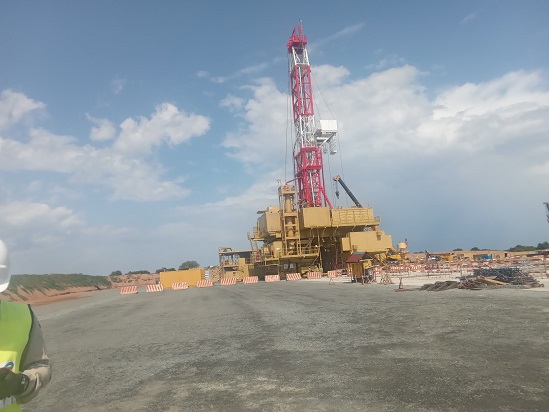

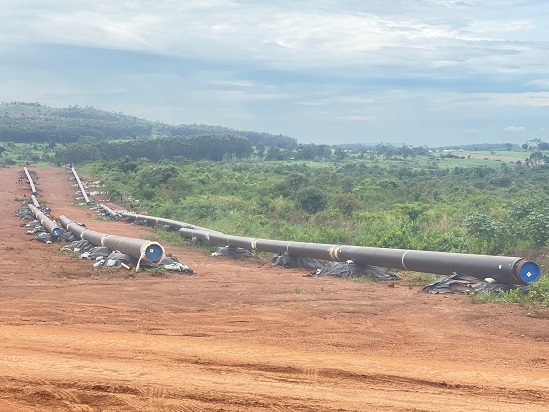
Construction of the East African Crude Oil pipeline is ongoing/Courtesy photo
Construction of the East African Crude Oil pipeline is ongoing/Courtesy photo
Uganda’s anticipated June/July oil production timeline is facing uncertainty due to delays in critical emergency preparedness infrastructure. Despite assurances from government and oil companies that first oil will flow by mid-year — with revenues expected by the end of the year or in 2027 — a key safety system remains significantly behind schedule.
Progress on the National Oil Spill Response and Monitoring Infrastructure Project, which is meant to strengthen the country’s preparedness for oil spill emergencies, has stalled due to inadequate funding. According to the 2025 report by the Office of the Auditor General, only UGX 1.2 billion has been released out of the required UGX 59.9 billion between the financial years 2022/23 and 2024/25.
Auditor General Edward Akol warned that failure to achieve critical project milestones poses serious risks to the 2026 First Oil target, while the absence of a functional emergency response capability exposes the country to environmental and safety threats. Uganda’s oil wells are located near water bodies, making spill prevention crucial. Additionally, the export pipeline — though largely buried — will stretch approximately 1,440 kilometres across inhabited communities, farmland, grazing areas, and protected ecosystems.
The sector is regulated by the Petroleum Authority of Uganda, which is overseeing developments alongside the Ministry of Energy and Mineral Development. PAU says it will continue engaging the Ministry of Finance, Planning and Economic Development, and the Ministry of Energy to secure funding for the project.
Several milestones are also required to meet the 2026 production target, including readiness of the Tilenga and Kingfisher fields, as well as the East African Crude Oil Pipeline. A review of monitoring reports for June 2025 showed overall completion rates lagging behind targets — 57 percent for Tilenga against 73.2 percent planned, 69.6 percent for Kingfisher against 73.2 percent, and 62.5 percent for EACOP against 72 percent.
By November 2025, however, progress had improved to 60 percent for Tilenga, 74 percent for Kingfisher — with all wells for first oil already drilled — and 75 percent for the export pipeline. Management attributed the gains to measures such as pre-commissioning tests, increased work shifts, and the establishment of an inter-ministerial committee to fast-track implementation.
Meanwhile, CNOOC reported in September 2025 that its Kingfisher project was 95 percent complete, with all stimulations done and on track for production. The company also indicated readiness through an Oil Spill Contingency Plan aimed at protecting water quality and biodiversity in the ecologically sensitive Albertine region. However, the Auditor General emphasised the need for urgent funding to operationalise critical infrastructure such as the Real-Time Monitoring Centre and Disaster Recovery System.
Although the project received UGX 446 million in the 2024/25 financial year — which was fully utilised — funding remained insufficient, resulting in only five out of ten planned surveillance tool sets being procured. Some progress has been recorded in other areas, including disaster recovery planning, oil spill drills, and development of an Oil Spill Equipment Hub through the Oil Spill Mutual Aid Group.
The Ministry of Finance has proposed maintaining the project budget at UGX 446 million this financial year, with projections rising to UGX 2 billion annually in 2026/27 and 2027/28. Experts warn that without a fully functional spill response system, potential oil leaks could contaminate drinking water sources, damage fisheries, harm tourism, and degrade fragile ecosystems.
-URN