
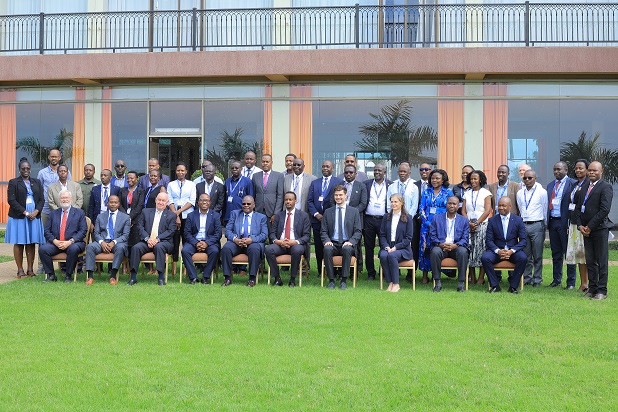
Some of the aviation stakeholders in a group photo on day one of the training
Aviation stakeholders in the East African region are undergoing a three-day training on regulatory excellence at Protea Hotel, Entebbe.
The training that runs from September 1-3, 2025 is being contacted by experts from Boeing International and Cranfield University and is jointly hosted by Uganda Civil Aviation Authority (UCAA) and the East African Community Civil Aviation Safety and Security Oversight Agency (EAC-CASSOA).
Speaking at the opening of the workshop, Fred K. Bamwesigye, the Director General at UCAA, said the aviation industry is today faced with rapid evolution and adoption of innovations, which comes with challenges of seamlessly integrating the new technologies, such as digitalization, cybersecurity, use of drones, electric Vertical Take-off and Landing (eVTOL), managing crises and advanced air mobility systems, among others.
“This calls for need for effective regulation in setting and enforcing standards, safeguarding stakeholders, and facilitating growth,” Bamwesigye said, adding: “To ensure that global air travel remains safe, secure, and efficient, we need to establish standardized procedures, foster innovation, protect the public from risks and promote continuous improvement while adapting to the ever-changing technological landscape and global demands.”
He added that regulators must ensure safety, fairness, transparency, and accountability in whatever they do.
“At the same time, we must act as enablers of growth and innovation, creating environments where industries can thrive, investments can be attracted, and where opportunities can be expanded,” he said, noting that it is timely that Boeing International deemed it prudent to partner with Cranfield University and the East African Community Civil Aviation Safety and Security Oversight Agency (EAC-CASSOA) at this critical time to organize this very pertinent three-day course under the theme “Regulatory Excellence – Leading the Way into the Future.”
“It is our hope that the program is going to deliver insights, practical strategies, and global best practices tailored to Regulators, ensuring sustainable growth and improved safety performance in the region. The regulations we craft ought to protect the passengers, crew, and the public by managing risks that are too complex for individuals to assess on their own, thereby fostering a culture of safety,” Bamwesigye said.
He added: “By standardizing procedures and navigation, regulations help the aviation system run smoothly and account for the unique limitations of aircraft and their pilots. Effective regulation supports a thriving global economy by creating a stable and predictable environment for investment and growth within the aviation sector. With technological advances, regulatory bodies must remain adaptable to ensure the framework continues to meet modern needs and remains relevant. We should not forget about compliance which is more than just following rules. It will require all of us to be actively involved in promoting a culture of safety and we should continue to do so through such engagements like training, and proactive risk management. International and regional cooperation engagements of this nature must be more regular since aviation is a global industry regulated by world bodies like ICAO and the regional safety and security agencies.”
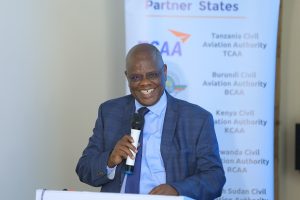
He called on aviation regulators and stakeholders not to forget the crucial role of Safety Management Systems (SMS) in maintaining effective oversight, assessing system conditions, and proactively identifying risks.
He said if aviation passengers are to benefit from the increased safety and security measures, this should come along with the assurance of consistent service standards.
“At the end of this three-day workshop, it is anticipated that all participants will better understand the evolving role of regulators in a dynamic aviation system, set effective regulatory standards and build stakeholder engagement skills,” he said.
Eng. Richard Gatete, the Executive Director at EAC-CASSOA, said the trainees will engage in sessions covering regulatory standards, stakeholder management, safety management systems, crisis response, accident investigation, and strategies for regulating emerging technologies.
“As the region embraces emerging developments- such as the pioneering use of drones for medical deliveries, advancements in cybersecurity, and the adoption of green technologies and renewable energy solutions at airports to curb emissions and promote sustainability, it is essential to establish the right regulatory frameworks to remain well-positioned and aligned with global aviation trends,” said Gatete.