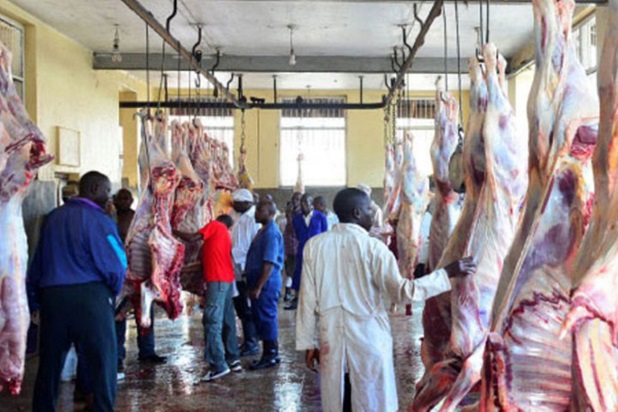


Some of the people learning from one of the exhibitors at the northern Uganda trade show at Gulu University-Photo By Simon Wokorach
Some of the people learning from one of the exhibitors at the northern Uganda trade show at Gulu University-Photo By Simon Wokorach
The State Minister of Animal Industry in the Ministry of Agriculture, retired Lt. Col. Bright Rwamirama, has warned farmers against the misuse of chemicals in farming. The Minister’s statement was delivered by Dr. Rose Ademun, the Commissioner for Animal Health, over the weekend at Gulu University during the Northern Uganda Agricultural Trade Show.
Rwamirama warned that, while Uganda expands its products to international markets, misuse of chemicals remains worrying and affects the standards required globally.
He acknowledged limited access to extension services but urged farmers to form cooperatives to access private-sector support and complement government efforts. He further challenged youth to embrace farming, saying: “Agriculture employs about 70 percent of the workforce where young people can exploit their potential with innovations.”
Commissioner Consolata Acayo from the Ministry of Agriculture also warned of the negative consequences of agro-chemical misuse, which affects European markets. She urged farmers to embrace organic production, leveraging organic manures to support both soil health and human well-being.
Dr. Lawrence Okidi, Dean of the Faculty of Agriculture at Gulu University, highlighted opportunities in agricultural innovations, emphasizing that technology allows youth to research production challenges and promote resilient farming against changing weather. He reaffirmed the University’s commitment to unlocking opportunities through research, innovations, and collaborations.
Food Scientist Benard Bwambale of Global Consumer Centre raised concerns about Ugandan food safety, linking chemical misuse to foodborne diseases. “To kill aflatoxins, one needs a very high temperature which our kitchens don’t have, and once they enter our bodies, they release those harmful wastes to compromise our health,” he noted.
Uganda’s Control of Agricultural Chemical Act, Cap. 29 regulates the manufacture, storage, distribution, and trade of agro-chemicals. However, enforcement remains challenging, with fake agro-inputs repeatedly entering the market and affecting quality. Agriculture continues to be Uganda’s economic backbone, contributing 24.7% to GDP in 2023/2024. Despite forward and backward linkages in agro-industrialization, annual growth remains stagnant at only 5%.
-URN