
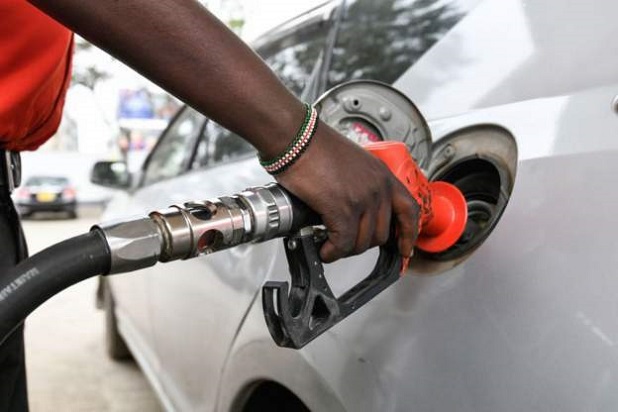
Fuel pump
The Ministry of Energy and Mineral Development has said that the shortage of funding is hindering the fight against fuel adulteration and smuggling.
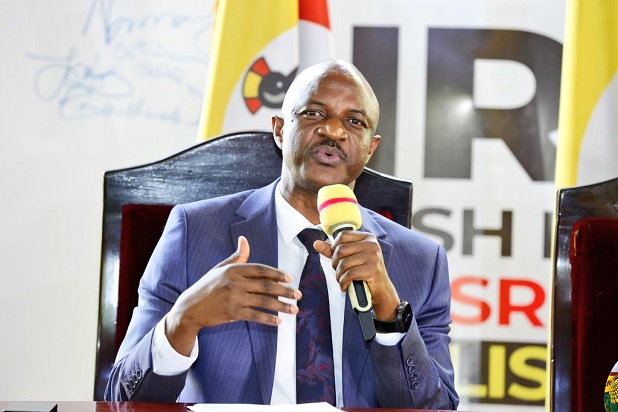
Speaking during a fuel consumer awareness campaign in South Western Uganda, on Thursday, Steven Barisigara, the Assistant Commissioner in Charge of Standards Licensing and Quality Assurance, said they have been developing capacity slowly to have a full coverage of a 100 per cent fuel quality monitor, but they are hindered by limited funds.
“We cannot cover the remaining part, but we are planning and budgeting to have more monitoring vehicles (mobile laboratories) to cover the whole country within this financial year so we expect two more vehicles to have the coverage increased to 100 per cent and we expect them in the first quarter of this financial year,” he said.
It was stated that adulteration of kerosene in petrol and diesel has compromised the quality of fuel in Uganda, as Ministry of Energy officials urge fuel dealers to shun the vice.
Spero Byokunda, the head of Petroleum Quality Assurance in the Ministry of Energy, stated that in 2008/9 the cases of adulteration were at 30 per cent when the fuel marking and quality monitoring program began, noting that vice is still the major problem leading to poor quality fuel in the market.
“The urge to adulterate is what is more in this country because kerosene is much cheaper and it is highly subsidized by the government, if maybe kerosene price was close to petrol and diesel, there would be no motivation to even mix it with petrol but because of the difference, there is always an urge propensity for people to use it to mix because of financial gain.”
He says, unlike tackling the issue of adulteration, the ministry has also attempted to reduce the vice of smuggling of fuel.
“I think smuggling is reduced because taxes on fuel are paid in Mombasa, by the time a product crosses the border, and its taxes are already collected,” he said.
Peter Kitimbo, Supervisor of the Fuel Marking and Quality Monitoring Program, Ministry of Energy and Mineral Development, stated that the vice of non-compliant products that were not meeting the standard was so much, but because of their improvement in having mobile laboratories, they have been able to reduce the rate of adulteration.
“It was there so much to an extent of 30 percent, as we talk now we have managed to reduce it to less than one percent, the vice is still there but as we improve on additional monitoring, more equipment, more mobile vehicles to reach every station every month we can control the quality of fuel sold at those petrol stations.”
He said that the fuel marking and quality monitoring program has helped level the business ground and provided a fair competition to all fuel dealers.
“We have managed to protect consumers, and we shall continue improving. Also, this program helps to monitor and capture smuggled products within the industry.
Mwesigwa Joseph, a fuel dealer, accused the ministry and UNBS of failing their responsibility of fighting illegal small fuel pumps and those that fuel in plastic bottles.
He also accused them of failing to implement the fuel setup distance among fuel pumps, noting that this has put many towns at risk.
“We know that there is a specific distance set for constructing fuel stations, but here in Mbarara city, the fuel stations are close to each other. I need to know who authorised that?”.