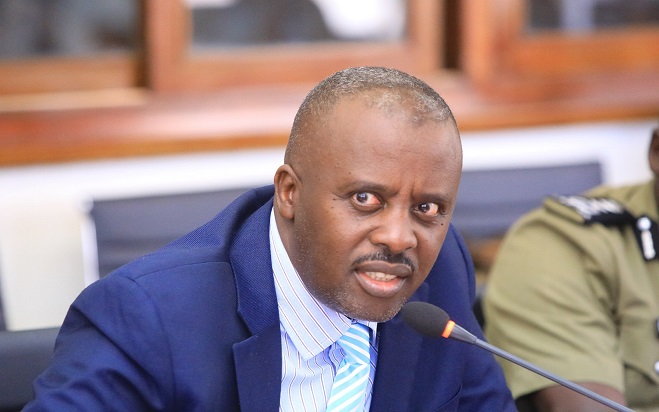

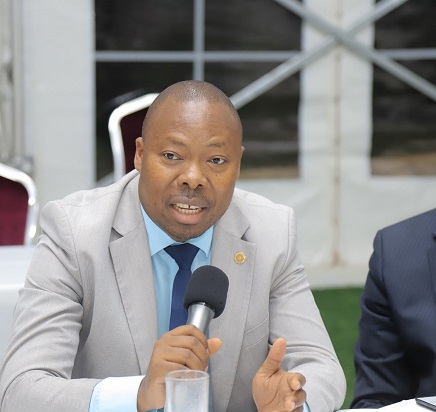
Hez Kimoomi Alinda, Executive Director of UFZEPA
Hez Kimoomi Alinda, Executive Director of UFZEPA
Uganda’s Free Zones story took a decisive turn in 2024 with the creation of the Uganda Free Zones and Export Promotions Authority (UFZEPA), a new institution born from the merger of the former Uganda Free Zones Authority (UFZA) and Uganda Export Promotions Board (UEPB).
For many in government and industry, this was more than an administrative change; it was a reset. UFZEPA was handed a clear but demanding mission: to accelerate industrialization, grow exports, and help position Uganda as Africa’s manufacturing and export hub, in line with Vision 2040 and the country’s bold Tenfold Growth ambition.
As the new authority launches out, it does so with eyes wide open to the realities it inherited for example limited financing estimated at a UGX 1.198 trillion gap, shortages of large, contiguous land for public Free Zones, and tax incentives that have not always been applied consistently enough to keep Uganda competitive.
Yet there is also quiet confidence. UFZEPA draws strength from its clear mandate to attract export-oriented investment and from tangible progress on the ground, including the Entebbe International Airport Free Zone, now nearly complete.
In an exclusive interview with Hez Kimoomi Alinda, the Executive Director of UFZEPA, he justified public Free Zones saying: “Increasingly when developers come into a market, they do not want to get entangled into setting-up the basic enabling infrastructure like water, electricity, ICT infrastructure and waste management systems.
They want to find basic works done, so it is upon us to make that happen in the public Special Economic Zones.”
Over the next five years, the authority hopes to expand public Special Economic Zones from one to five, develop agro-export processing hubs in districts such as Kumi and Mubende, and formalize tourism and recreation zones to widen the export services base.
If these plans hold, the results by 2029/30 could be transformative: exports nearing USD 26 billion, SEZ-generated exports rising to over USD 2 billion, USD 3.4 billion in new investment, 50,000 jobs created, and a sharp rise in manufactured goods in the export mix.