

Mbale Floods destroy crops
Floods destroyed crops in Mbale a few months ago/Courtesy photo
Climate change continues to rank among the least of Ugandans’ concerns, despite repeated campaigns and interventions by government agencies, civil society, and the private sector.
This finding emerges from the latest Sauti za Wananchi survey conducted by Twaweza, a non-governmental organisation that monitors citizens’ views on governance and public services. The study, carried out between February and March 2025, reveals that climate change was cited by only three per cent of respondents as a pressing issue.
In sharp contrast, unemployment (39 per cent), health services (39 per cent), inflation (33 per cent), and corruption (27 per cent) dominate the public’s list of concerns. Other issues, such as the quality of education (21 per cent) and transport challenges, also ranked higher than climate change.
These findings come at a time when government and civil society organisations have intensified efforts to sensitise the public on climate risks. Yet, the survey data suggest that these campaigns have had a limited impact on public perception, even as Uganda experiences increasingly severe weather events linked to climate change.
In recent weeks, deadly landslides triggered by prolonged torrential rains claimed at least six lives and left 17 people missing in Bukwo and Kapchorwa districts. Earlier in the same week, similar incidents in Bukwo and Kween resulted in nine fatalities, highlighting the recurring devastation in eastern Uganda, particularly in Bududa.
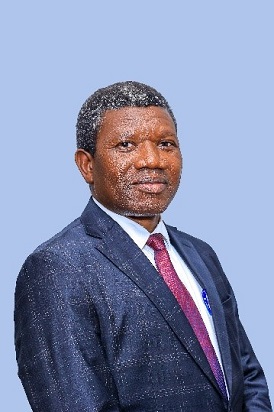
While numerous awareness campaigns have been launched, some scholars question the motivations behind these initiatives. Professor Julius Kiiza of Makerere University’s Department of Political Science, speaking during the Climate Justice Week of Action organised by ActionAid Uganda, argued that many climate campaigns are shaped by Western interests.
According to Professor Kiiza, such initiatives often aim to discourage African nations from fully utilising their natural resources or adopting industrial technologies, thereby keeping them economically dependent. This, he suggests, may explain why climate change resonates so little with the average Ugandan.
Many campaigns focus on forest preservation by discouraging tree cutting and limiting the extraction of natural resources. However, Professor Kiiza contends that these approaches overlook the structural challenges created by the introduction of industrial capitalism in Africa.
“These campaigns often constrain local populations from using available resources, even though their consumption levels have minimal global impact compared to the industrial activities of developed nations,” Kiiza said. “The people we represent have immediate needs that must be met. Climate justice should not ignore the realities of human survival; it should ensure that today’s resources meet the needs of the current generation.”
While cautioning against reckless exploitation, Professor Kiiza emphasised responsible and sustainable resource use. “Utilise the resources fairly and equitably, keeping in mind the needs of both current and future generations. It is not about leaving forests untouched or water unused; it is about using these resources sustainably,” he said.
Meanwhile, environmental activists continue to urge the government and key stakeholders to adopt sustainable mechanisms that balance human survival with environmental protection. Among the top recommendations is the promotion of agroecology over industrial agriculture, as part of a broader strategy to achieve sustainable production and climate resilience.
-URN