

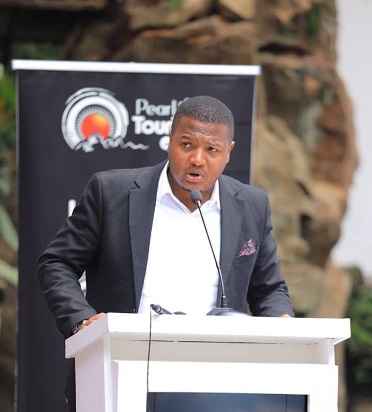
By Isa Kato
By Isa Kato
The proposed Protection of Sovereignty Bill, 2026 is rooted in a legitimate and understandable objective which is to safeguard national independence from undue foreign influence. Every sovereign nation has that right. However, the question we must confront honestly is this; at what cost?
In its current form, this Bill risks protecting sovereignty with one hand while undermining Uganda’s economic future with the other.
Tourism, one of Uganda’s most promising sectors, tells the story clearly. The Country welcomed over 1.3 million visitors in 2024, generating more than $1.2 billion in foreign exchange and supporting hundreds of thousands of jobs. This growth has not happened in isolation. It is the direct result of global partnerships, foreign investment, diaspora engagement, and international market access.
The Sovereignty Bill threatens to disrupt all the four.
By placing strict limits on foreign funding and broadly defining who qualifies as a “foreigner,” the law risks capturing not just political actors, but ordinary business relationships that sustain tourism. International hotel brands, global booking platforms, conservation investors, and even diaspora Ugandans building lodges back home could all fall within its scope.
Tourism is a capital-intensive industry. A single eco-lodge, hotel, or concession often requires millions of dollars in financing far beyond the proposed funding thresholds. If every such transaction requires bureaucratic approval or carries legal risk, investors will not wait. They will simply go elsewhere.
And “elsewhere” is not far. Competing destinations like Kenya, Tanzania, and Rwanda are aggressively positioning themselves as open, predictable, and investor-friendly. In tourism, perception is everything. Once confidence is shaken, it is not easily restored.
Even more concerning is the potential impact on Uganda’s diaspora. By classifying Ugandans living abroad as “foreigners,” the Bill risks alienating one of the country’s most loyal investor groups. These are individuals who send remittances, build businesses, and bring visitors home. To treat them as external actors requiring state clearance is to misread their role in national development.
Beyond tourism, the implications for Foreign Direct Investment are even broader. Investors value certainty above all else. Policies that are expansive, unclear, and punitive, even if well-intentioned create hesitation. And hesitation is the enemy of investment.
Uganda does not suffer from a lack of opportunity. It suffers, at times, from policy signals that contradict our own ambitions.
On one hand, the Country seeks to attract billions in investment, grow exports, and position itself as a regional hub. On the other, it proposes laws that will restrict capital flows, complicate partnerships, and criminalize routine commercial activity.
This is the contradiction that must be resolved.
Protecting sovereignty should not mean isolating the economy. It should mean strengthening Uganda’s ability to engage the World on its own terms; confidently, competitively, and transparently.
My argument is not to abandon the Bill, but to refine it: –
- Clearly distinguish between political interference and commercial investment.
- Exempt key economic sectors like tourism from restrictive funding caps.
- Recognize diaspora Ugandans as partners, not outsiders.
- Introduce clarity, thresholds, and safeguards that inspire confidence rather than fear.
Uganda’s future will not be built in isolation. It will be built through smart partnerships, strategic openness, and policy coherence.
The Sovereignty Bill, as it stands, risks sending the wrong message at the wrong time.
And in a global economy where capital is mobile and perception is reality, that is a risk Uganda simply cannot afford.
The author is a Destination and Tourism Development consultant, Vice President- Uganda Tourism Association




This is very true , Exempt key economic sectors like tourism from restrictive funding caps.
Great insight on what this bill.
Great analysis 👍
Well articulated VP