
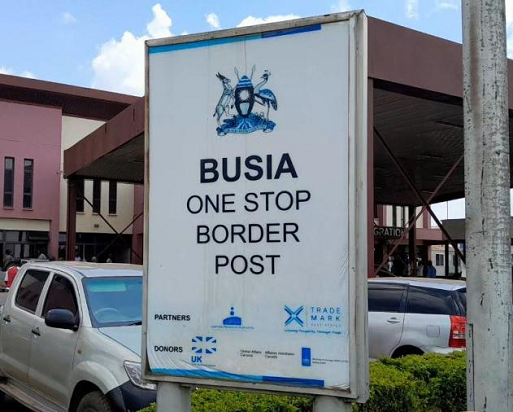
Busia Border
The Busia Border
A section of residents in Busia District have resorted to crossing into Busia County, Kenya, to withdraw money from their mobile money accounts due to restrictions on cash withdrawals in Uganda.
The decision follows government-imposed restrictions on cash withdrawals from mobile money accounts, while sending money is still allowed.
The restrictions, which started on January 14, ahead of the presidential and parliamentary elections, have not yet been lifted. Currently, most mobile money outlets managed by agents in the district are closed.
Residents at the Busia border are now sending their funds from Ugandan MTN and Airtel accounts to Kenyan mobile money wallets, withdrawing Kenyan shillings, and then exchanging them back into Ugandan shillings.
They say this does not affect them significantly because transaction charges in Kenya are lower than in Uganda, and the money they receive is equivalent to the amount deposited in their accounts.
Abangi Hamphrance, an internet café operator in Busia, says he allows clients to send money through his account, then crosses into Kenya to withdraw, helping them navigate the restrictions.
Mangeni Wacha, the Solo Village chairperson, explained that restrictions on mobile money transactions have affected many people, making it difficult to support sick relatives or meet urgent household needs.
Francis Wanyama from Busia said life has become harder due to withdrawal restrictions and appealed to the government to lift them, as elections for major posts have concluded.
Lyaka Hellen, a mobile money agent, Majanji Road, Busia town. reported losing UGX 20,000 daily in commissions she used to earn before the restrictions. She added that the alternative of residents withdrawing money in Kenya has caused Ugandan agents significant losses.
There is a country-wide outcry by the mobile money clients that they cannot withdraw cash from the agents. Some mobile money users have indicated that they are unable to settle payments even for emergencies like medical bills.
Mobile money has been a key driver of financial inclusion in Uganda, allowing millions of people, particularly in rural areas, to access banking services, send money, and save. In Uganda, active mobile money accounts number in the tens of millions, with low-value daily transactions dominating the system. Government restrictions ahead of elections are intended to prevent misinformation, fraud, and electoral violence.
However, human rights groups warn that such shutdowns can undermine access to essential services, including financial services. Experts note that while digital finance is resilient, sudden restrictions erode trust in mobile platforms and push users toward alternative, sometimes riskier solutions, like cross-border withdrawals.
The impact is felt across households, businesses, and micro-economies. Mobile money agents lose vital commissions, residents face additional travel costs, and communities experience delays in receiving funds.
The consequences extend beyond personal inconvenience. When agents close up shop and daily commissions vanish, local micro‑economies suffer, and households lose critical buffers against shocks. The travel to Kenya to access funds, while creative, underscores how digital systems can be resilient yet fragile in times of crisis.
-URN