


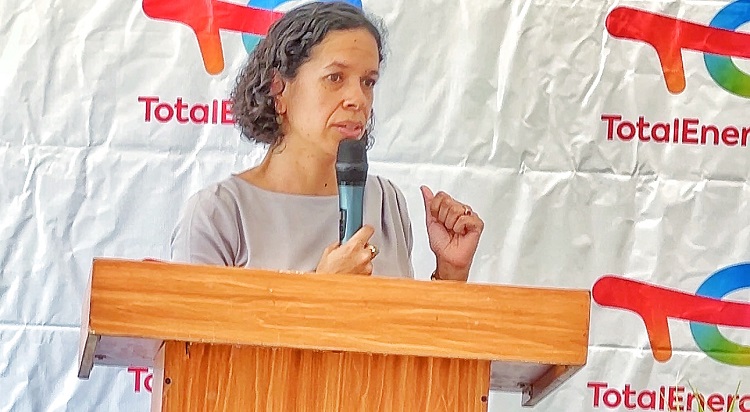
Cleophas Ndorere, Commissioner for External Trade
Cleophas Ndorere, Commissioner for External Trade
Summary: It is feared that smallholder farmers will struggle to survive under the new regulations unless the compliance process is revised.
The Ministry of Trade, Industry and Cooperatives has acknowledged that Uganda remains far from meeting the European Union’s new agricultural market regulations, particularly among smallholder farmers.
Cleophas Ndorere, Commissioner for External Trade, said the biggest challenge remains traceability, a core requirement under the EU Deforestation Regulation (EUDR). The law demands proof that agricultural products entering the EU market were not produced on land deforested in 2020 or later.
While large producers must comply by 31 December 2025, smallholder farmers have until July 2026. The regulation applies not only to coffee, Uganda’s key export, but also to cocoa, soy, cattle, palm oil, wood, and rubber.
Ndorere noted that registering and certifying farmers is achievable, but tracking products back to individual smallholder plots remains a major obstacle.
Civil society organisations in Uganda and across Africa have expressed support for the regulations, arguing that they will improve production standards, eliminate unsafe practices, and enhance global competitiveness.
However, they warn that the implementation process must be adjusted to avoid disrupting developing economies. Ndorere also cautioned producers that the EU frequently imposes new restrictions without prior notice, leading to financial losses for exporters.
He questioned why exports face such strict rules when European tourists visiting Uganda consume locally grown food without complaint. Nevertheless, he acknowledged EU’s high standards.
Jane Nalunga, Executive Director of SEATINI Uganda, told the EAC–SADC High-Level Policy Dialogue that Africa must demand equity in negotiations with the EU. She argued that global shifts, including tariff changes, rising geopolitical tensions, and challenges at the World Trade Organisation, require Africa to strategically reposition itself.
Records from the Ministry of Agriculture show more than 1.5 million growers are registered, yet thousands of sellers and smallholder farmers remain outside formal traceability systems, exposing value chains to compliance risks.
Ndorere added that the EU’s ever-changing rules have made compliance the second-largest cost for exporters after logistics, a trend he described as worrying.
Ashlee Tuttleman, Global Coffee Lead at VOCAL Network, said certification is now essential for accessing European markets because it enhances traceability and strengthens cooperatives. However, she warned that certification alone does not guarantee higher earnings for farmers.
“Smallholder farmers receive the least value in the chain, while downstream actors retain the most. Producers bear the greatest risks without adequate support,” she said.
Agricultural economist Dr Bohela Lunogelo of Tanzania’s Economic and Social Research Foundation echoed calls for a phased rollout of the EUDR. He urged African governments to push for technical assistance, recognition of regional certification systems, and stronger representation of smallholder interests at global forums.
“Compliance should be integrated into Africa’s agricultural transformation agenda,” he said, adding that requirements such as agroforestry and regenerative practices should be treated as opportunities for long-term sector development rather than burdens.
Private sector leaders fear the EUDR could devastate smallholder-dominated agricultural value chains if deadlines are not adjusted. “The requirements threaten value chains, especially since most production comes from smallholder farmers who cannot meet compliance demands on their own,” said Francis Kisirinya, CEO of the Uganda Agribusiness Alliance.
He warned that high certification costs, coupled with costly financing, make it difficult for businesses to remain competitive. If smallholders drop out of production, he said, entire supply chains could collapse. With agriculture being Africa’s leading export, largely to Europe, experts warn that unilateral EU rules pose a growing threat.
Francine Rutazana, Rwanda’s representative to the East African Legislative Assembly, argued that Africa must build internal capacity and invest in infrastructure to meet global standards and reduce vulnerability. “To reverse the current trade imbalance, Africa must focus on its own resources and strengthen its ability to meet international trade conditions,” she said.
Uganda’s hope for relief lies in recent developments in Brussels. On 26 November, the European Parliament backed a full one-year extension for large and medium operators, shifting compliance to December 2026, and a one-and-a-half-year extension for small and micro-operators, moving their deadline to June 2027.
A review to simplify implementation is expected in April 2026. This decision has cleared the path for negotiations between EU institutions. However, until the final law is adopted, the current EUDR deadline of 30 December 2025 remains legally binding.
-URN



yes, it good 👍