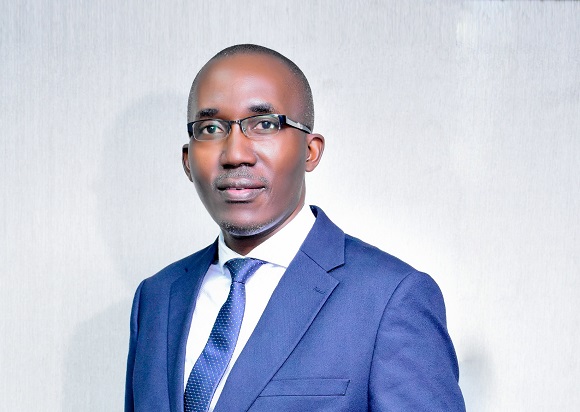

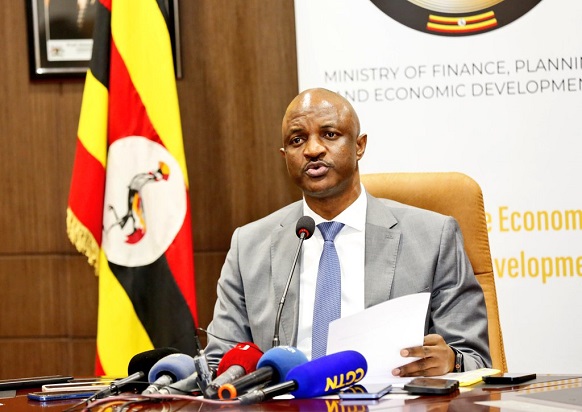
Ramathan Ggoobi, the Permanent Secretary/ Secretary to the Treasury, Ministry of Finance Planning and Economic Development
By Prisca Wanyenya
The Ministry of Finance has revealed that out of 107 sampled projects under implementation in Uganda, 93 have delayed, with only 6 completed and 7 on track, while only one project is ahead of schedule.
The details are contained in the Performance of Externally Funded and Selected Government Funded Projects Report (December 2025 – May 2026) released on September 8, 2026 by the Ministry of Finance.
Of the sampled projects, 45 are funded by Government, while 62 are externally funded, and these have registered the biggest delays.
The report noted that the best performing programme was the Public Sector Transformation Programme that had its only project on track. This was followed by the Regional Balanced Development Programme with one of its 2 projects completed.
On the other hand, the Human Capital Development Programme had the only project under the Education sub-programme that was ahead of schedule.
Additionally, of the 13 programmes, 7 (53.8%) had all their projects behind schedule. This was most prevalent in the Natural Resources, Environment, Climate Change, and Land and Water Management Programme that had all its 24 projects behind schedule.
This trend had improved for the Agro-industrialisation Programme that had two projects completed and one on track during this review period. On the other hand, the Digitalisation Programme had declined, as it had one project on track during the last review, but all are now behind schedule.
Worst Hit Sectors
In the breakdown provided by Government, among the sectors with the most delayed projects is Natural Resources, Environment, Lands and Water Management that has 24 projects, yet all are behind schedule.
This is followed by the Integrated Transport Programme that has 22 projects, while only one project was completed and the rest of the 21 projects under the Ministry of Works and Transport are behind schedule.
Another programme grappling with delays is Human Capital Development that encompasses Health and Education sectors where there are 27 projects and of these, 20 are behind schedule, while 2 were completed and only 3 are on track.
Under the Sustainable Energy Development programme, there are 7 projects being implemented of which 6 are behind schedule, while under the Agro-Industrialisation programme, of the 12 projects under implementation, 9 are behind schedule.
“Since December 2025, project implementation has been poor. Overall, 14 (13%) projects had stagnated while 81 (75.7%) had a slight improvement. Most (71.4%) projects that had stagnated were externally funded, especially under the Integrated Transport and Infrastructure Services Programme. This has grave implications for payment of commission fees on non-performing loans. Relatedly, 87% of Government of Uganda projects recorded slight improvements in implementation,” the report noted.
Why Projects Delay
According to the Ministry of Finance, the most common challenges faced by implementers were delayed procurements, poor planning and readiness for projects that led to rescoping, delayed acquisition of Right of Way (RoW), and delayed and inadequate counterpart funds. These were followed by weak capacity of contractors and delayed payments.
The Ministry also admitted that the study was met with several challenges including inadequate time for assessment which limited in-depth analysis of projects using the EVM tool, requiring detailed expenditure data by output for every project since inception.
The Ministry also cited inconsistencies in loan financial figures between implementing agencies and Ministry of Finance, noting this was worsened by the fact that some loans are disbursed in more than one currency and reconciling these to one base currency gave inconsistent figures.
Another challenge was lack of key project documents such as work breakdown structures, schedules, costs, scope and risk management plans, mainly because these key documents are not a Development Committee requirement before projects enter the Public Implementation Plan.