

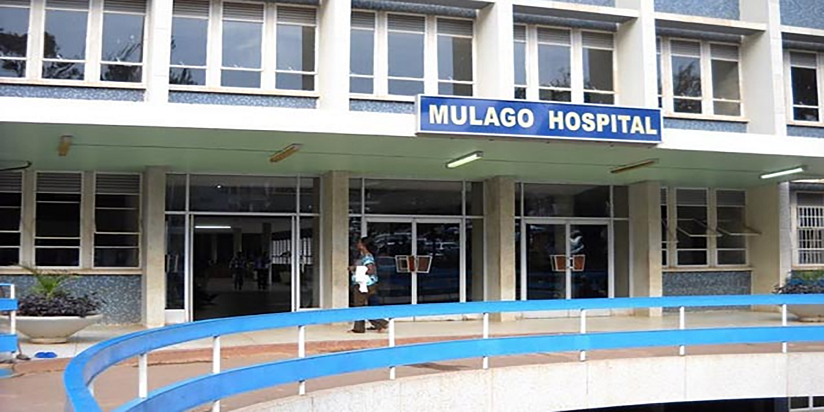
Mulago National Referral Hospital
A new report by the Auditor General has revealed the rot in many government-run hospitals, highlighting that most Intensive Care Units (ICUs) are in a bad state.
The Auditor General’s report for 2024/25 reveals that the Ministry of Health procured and delivered Intensive Care Unit (ICU) equipment to 15 Regional Referral Hospitals (RRHs), three (3) National Referral Hospitals and seven (7) General Hospitals in the last five years. The equipment was worth UGX150Bn, and it included Heating, Ventilation and Air Conditioning (HVAC) systems for ICU and assorted critical-care equipment for New-born Intensive Care Units (NICU) operations.
However, although the equipment was delivered to the facilities, several hospitals could not utilise this equipment due to gaps in ICU infrastructure, staffing, power stability and inadequate oxygen support systems.
Unreliable power supply
Edward Akol, the Auditor General reveals in his report that Five (5) hospitals lacked adequate power backup systems to support the continuous operation of critical care equipment.
“ICU units, oxygen plants and diagnostic machines require stable, uninterrupted electricity, yet many hospitals did not have generators with sufficient capacity, had faulty switching systems or lacked alternative power sources entirely,” the report reads in part, adding that this challenge was observed at Hoima RRH, Jinja RRH, Mubende RRH, Fort Portal RRH and Kabale RRH.
“This affected the installation of ventilators, patient monitors and other ICU equipment, which remained boxed or stored in temporary rooms instead of being installed and commissioned,” the report says.
Non-functional diagnostic equipment
According to the report, several key pieces of diagnostic equipment essential to ICU case management were either non-functional or overdue for servicing.
“The X-ray machines at Entebbe RRH, Hoima RRH, and Jinja RRH were non-functional due to delayed maintenance and mechanical/technical faults,” the report says, adding that the non-functional or inadequately maintained diagnostic equipment undermines the effective operation of ICU services and limits the ability of referral hospitals to provide timely and accurate diagnosis for critically ill patients.
Inadequate oxygen supply systems
The Auditor General further reveals that there were gaps in the functionality, reliability and safety of oxygen supply systems.
“Several facilities lacked fully installed pipeline systems, had oxygen plants that were not operational, or had unresolved technical failures affecting production capacity. These challenges were observed at Mubende RRH, Fort Portal RRH, and Kabale RRH,” the report reads in part, adding that these gaps severely limited the hospitals’ ability to meet oxygen demand, particularly in ICUs, theatres and emergency units where continuous oxygen supply is essential to patient survival.
Inadequate maintenance budget
The report notes that health facilities were grappling with challenges of maintenance of the medical equipment due to the inadequate budget.
For example, the report says, oxygen plants require quarterly servicing, yet only nine (9) of the 26 oxygen plants were serviced and only once during the year due to limited funding.
In addition, the report says, the funds provided for maintenance of X-ray machines could only cover 21 of the 59 machines stationed in the various RRHs.
“The budget for maintenance of this equipment has remained the same at approximately UGX7.6Bn since FY 2015/2016, despite the acquisition of sophisticated medical equipment for the Regional Referral Hospitals. This is 23% of the required budget of UGX.33Bn,” the report reveals, adding that these challenges collectively affected the capacity of these hospitals to deliver critical health care services despite the significant government investment.
Staffing Gaps in Critical Care Units
The report reveals shocking staffing levels in critical Care units.
These refer to specialised units that provide intensive care to patients with life-threatening conditions such as severe injuries or illnesses. These include Intensive Care Units (ICUs), High Dependency Units (HDUs), Coronary Care Units (CCUs), Neonatal ICUs, Paediatric ICUs, among others. These units require highly specialized technology and trained personnel due to the criticality of the cases they handle.
The Auditor General reviewed the level of staffing in the critical care units of 16 Regional Referral Hospitals (RRHs) and five (5) National Referral Hospitals (NRHs) and noted acute staffing shortages.
“For all the staff categories, the understaffing was more than 90% and in some cases 100%,” the report says.
The report reveals that out of the approved 20 Senior Consultants (Intensivist), only one position is filled, meaning 95% positions are vacant.
On Consultant (Intensivist), out of the 24 approved positions, only one is filled, leaving 96% of the positions unfilled.
On Medical Officer Special Grade (Intensivist) only one position is filled out of the 43 approved positions, leaving 98% of the positions vacant. The report further shows that under the Medical Officers (Critical Care), out of the 60 approved positions, only two are filled, leaving a staffing shortage of 97%. For Principal Nursing Officers (Critical Care), out of the approved 17 positions, they are 100% not filled, while under Senior Nursing Officers (Critical Care), only three positions are filled out of the 68 approved positions.
For Nursing Officers (Critical Care), only 28 positions are filled out of the 302 approved positions, while for Assistant Nursing Officers, only 28 are filled out of the 335 approved positions. On Respiratory / Biomedical Technicians, one position is filled out of the 12 approved positions.
According to the Auditor General, these staffing gaps undermine the Country’s ability to provide high-quality critical care services, increase avoidable mortality, and increase the costs of treatment when a patient has to seek alternative treatment from private facilities.
Failure to Attract Particular Health Specialists
The Auditor General further observed that Public Health facilities are grappling with the challenge of lack of health care specialists, such as Consultant Ophthalmologists, Consultant Pathologists, Consultant Psychiatrists, and Medical Officer Special Grade in Anaesthesia and Emergency cases.
These consultants typically diagnose and treat complex conditions, perform specialised medical procedures, and conduct specialised types of medical research.
For example, while there’s need for 140 Anesthetists, only 48 positions are filled, leaving 65% positions vacant. For Psychiatrists, there are 114 approved positions but only 39 are filled, leaving 66% positions vacant. Under Emergency Medicine Specialists, only 33 positions are filled out of the 97 approved positions. The report further says out of the 124 approved Ophthalmologists, only 42 positions are filled, leaving 66% positions vacant. Additionally, while there are 62 approved Pathologists, only 21 positions are filled. There are also 89 approved ENT Specialists, but only 30 are filled.
“The failure to attract specialists in Public Health facilities was caused by the high entry requirements for most of these positions, which is usually a master’s degree in a clinical speciality and a minimum of three years’ post qualification experience,” the report says, adding: “In addition, the wage allocations to the Public Health facilities is inadequate to remunerate these specialists compared to what they are paid under private practice.
The inability to attract specialists in Public Health facilities continues to undermine service delivery in critical clinical areas. This results in delayed medical care, increased referrals to private health care providers, increased risk of mortality, and forces patients to seek costly private or overseas treatment.”
The AG adds: “I advised the Government to develop a strategy and targeted interventions to attract specialists to Public Health facilities.”
About the Author